A drain pump that keeps running after the drum looks empty does not prove that the pump is faulty. Many washers deliberately continue draining when the control still receives a “water present” signal, an anti-flood device is active, or an interrupted phase has not completed. A useful diagnosis separates four conditions: water is truly trapped, the drain hose is siphoning, the level signal is implausible, or a leak-protection input is active. Any check made with a panel removed must be done with the washer unplugged.
Use the timing of the symptom
Note exactly when the pump starts. Immediate pumping as soon as the washer is powered, before a program is selected, points more strongly to a protective response or a retained level signal. Pumping only near the end of a cycle can be a long drain caused by restricted flow. A continuous motor sound with little water at the outlet may mean the impeller is spinning in air, but it can also indicate debris or a restriction upstream.
| Observation | Useful hypothesis | Next check |
|---|---|---|
| Pump starts immediately at power-up | Leak protection or level still detected | Unplug; look for base water and visible leaks |
| Pump runs after a slow drain | Restricted filter, sump path or hose | Clean user access points and inspect hose routing |
| Water returns after the pump stops | Siphoning or household drain backflow | Check hose height, insertion and standpipe |
| Drum is empty but level remains wrong | Pressure hose, air chamber or sensor issue | Model-specific inspection while unplugged |
Safety and diagnostic limits
Unplug the washer, close the inlet valves and wait for all motion to stop. The pump may restart automatically while power is present. Do not probe mains voltage in an open appliance. Never bypass a base float, door interlock or overfill protection. If water has reached connectors, insulation is heat-damaged, or the supply trips, leave the washer disconnected and use qualified service.
Anti-flood hardware varies. Some models use a lower tray and float; others use different leak logic or no accessible float. An apparently empty drum says nothing about the lower base. The model manual and service information take priority over a generic layout.
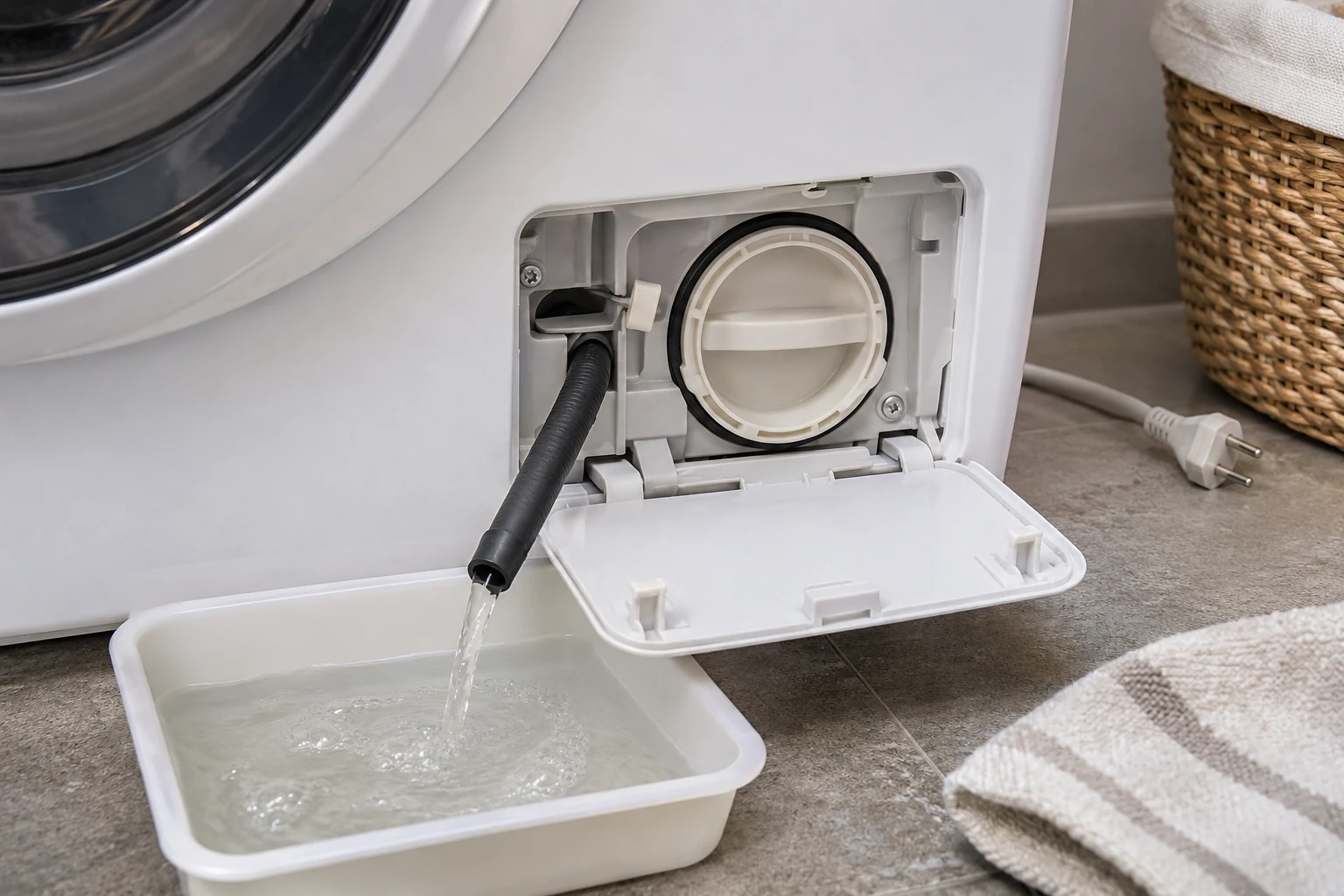
Unpowered diagnostic sequence
- Prepare for residual water. Put towels and a shallow tray at the service flap. Use the emergency hose if fitted. Otherwise loosen the filter slowly. Water may still be hot after a recent cycle.
- Inspect the filter and pump inlet. Remove coins, fibers, buttons and other debris. Look at the impeller without forcing it. Magnetic pumps can feel stepped when turned; a hard obstruction or broken vane is different.
- Inspect the external drain hose. Look for a kink, crushing, excessive insertion and a blocked standpipe. Follow the installation height in the manual. A low hose can siphon, while a restricted household drain can send water back.
- Leave the washer disconnected for several minutes. This can reset temporary control state, but it cannot repair a leak or level fault. A symptom that immediately returns still needs diagnosis.
- Run one short test with all panels installed. Restore water and power, then select drain or a short rinse. Observe from outside: outlet flow, water return, leaks and pump duration. Stop at once if water escapes or an abnormal odor appears.
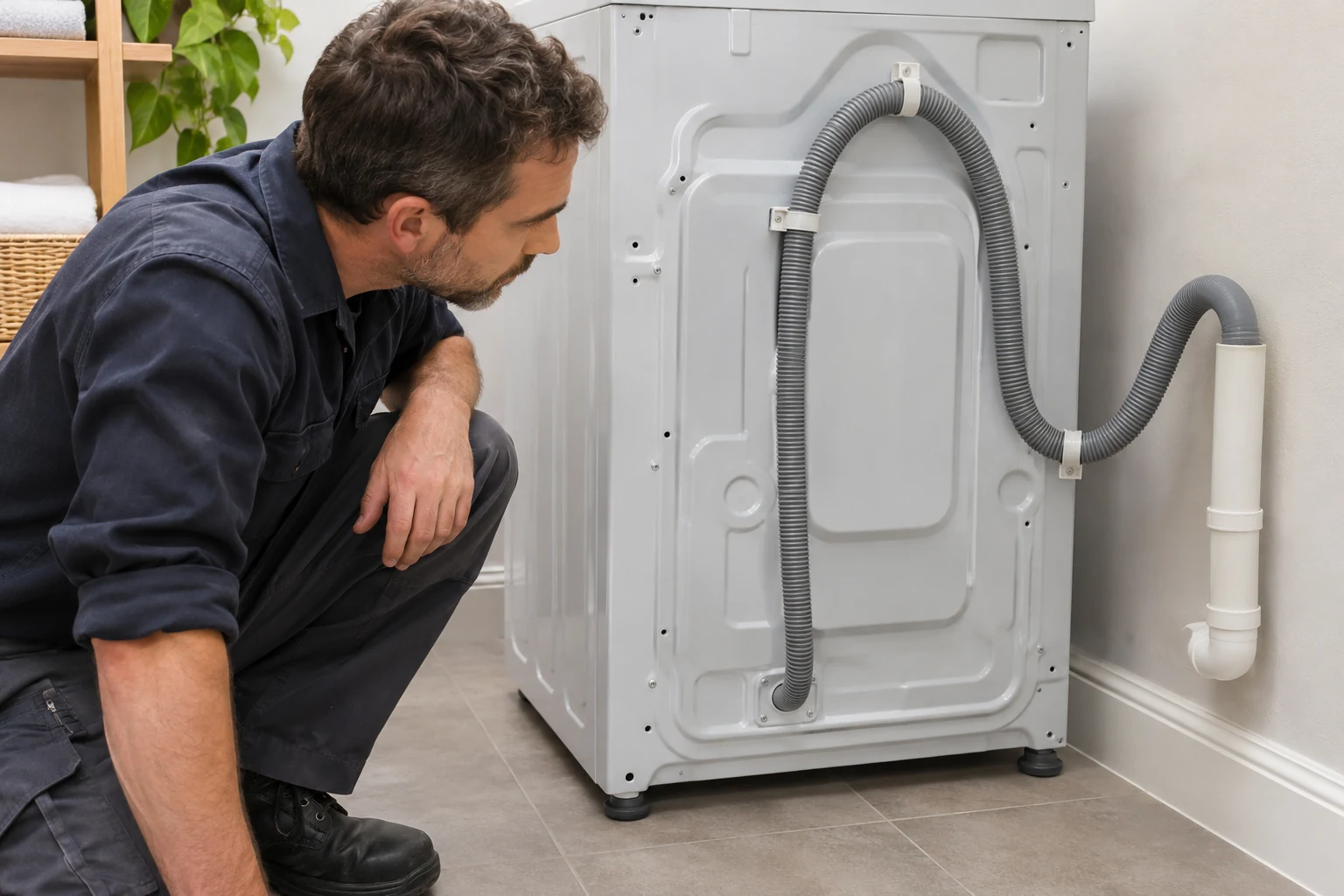
When leak protection is a better lead
A pump that starts immediately and prevents the normal program from beginning is compatible with water detected in a base tray. The float is not necessarily the failed part. Find the source: a loose clamp, split hose, excessive foam, dispenser overflow or tub leak. Tilting the washer to empty the base can hide the symptom without correcting the leak and may move water toward electrical parts, so it is not a safe repair method.
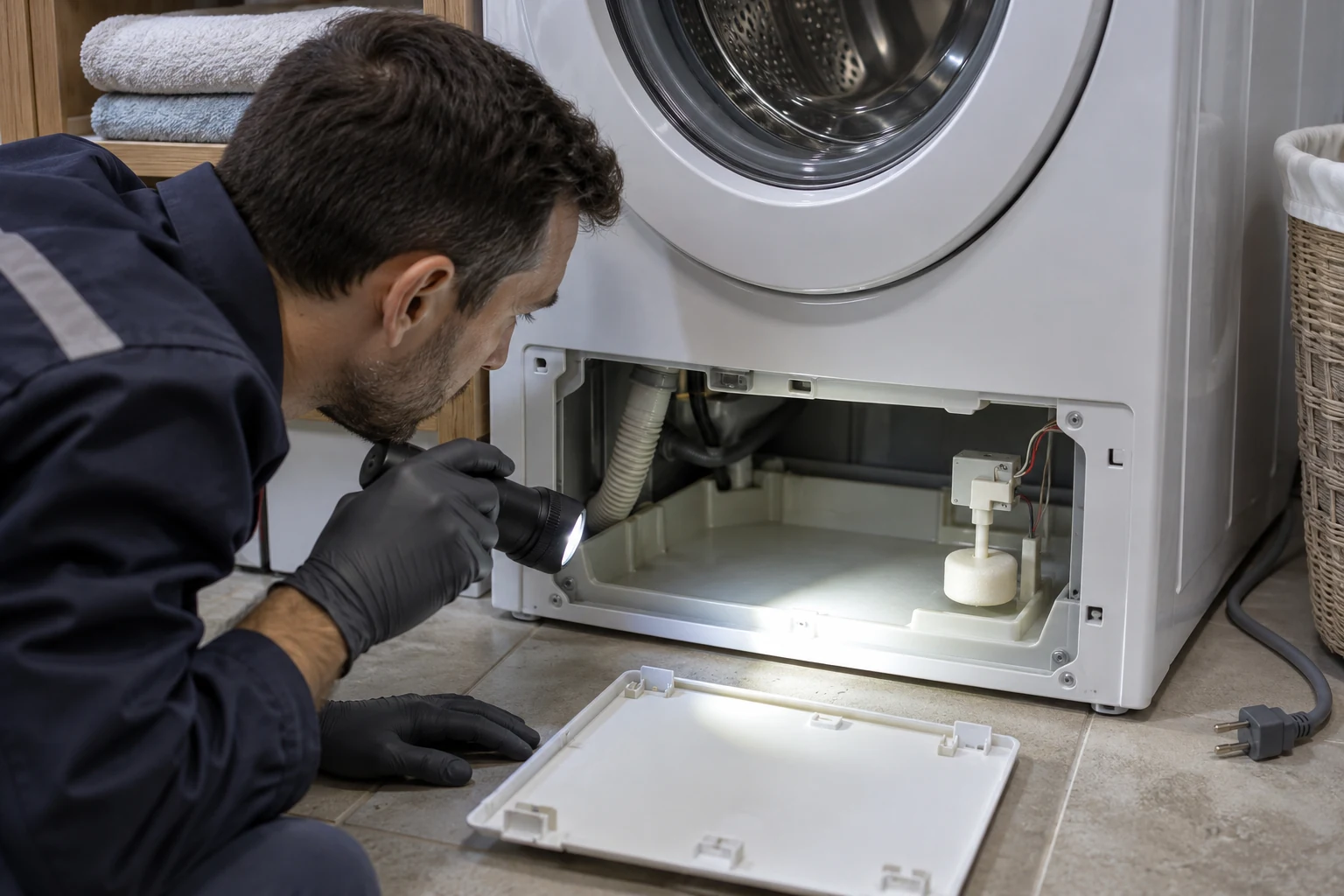
What a base inspection can establish
If the model instructions permit lower-panel access, inspect only with power disconnected. Water, detergent residue or mineral tracks confirm that liquid reached the base but do not identify the source by themselves. A float can also remain mechanically raised after the tray dries. Photograph the condition before moving anything and never energize the washer while the protective panel is off.
How the water-level circuit can keep the pump on
A small hose commonly carries air pressure from an air chamber at the tub to a level sensor. Detergent deposits, a pinched or split hose, heavy suds or corroded connections can make the level information implausible. The control may continue draining to reduce overflow risk. Check the whole pressure path and the exact part number before condemning the sensor.
Do not apply compressed air or blow hard into an electronic pressure sensor. Some mechanical switches click; other sensors produce an analog or frequency signal and cannot be approved with a simple continuity test. Pin assignments and expected values must come from the service data for the exact model.
Interpret the controlled test
| Result | Careful interpretation | Action |
|---|---|---|
| Strong flow returns and pump stops | An accessible restriction was probably removed | Observe one full cycle and identify the debris source |
| Strong flow but immediate pumping continues | Protective command or implausible level remains | Stop repeated tests and use model diagnostics |
| Water or residue is in the base | A leak or earlier overflow is plausible | Locate and repair the leak before use |
| No accessible blockage and weak noisy flow | Internal obstruction or worn pump remains possible | Service is justified; do not infer pump failure from sound alone |
Common wrong turns
Replacing the pump first is expensive because a healthy pump can be obeying the wrong input. A brief unplug-reset does not prove that an intermittent leak is gone. Running the pump dry does not demonstrate its flow under load. Hearing the motor also does not prove that water is moving through a clear hose.
Practical questions
Can the pump run briefly after the cycle?
Yes. A short programmed drain can be normal. Investigate when it persists, starts at every power-up or blocks every new cycle.
Does an empty drum rule out a level fault?
No. A blocked pressure chamber or incorrect sensor signal can remain after visible water has gone.
Can I unplug the float to finish a load?
No. It is a leak-protection input. Bypassing it can allow flooding, electrical hazards and further damage.
When should I stop?
Stop when diagnosis would require live access, water is near wiring, the supply trips, or the model procedure calls for internal electrical measurements.
Sources consulted November 5, 2026
- Bosch drain-pump cleaning guidance — power isolation and controlled water removal.
- Bosch no-drain support — kinked hose and blocked pump checks.
- Electrolux E35 support — pressure-sensor overfill indication and continuous water behavior.
- Samsung washer information codes — water-level and leakage indications.
Soyez le premier à laisser un commentaire.