Quick Fix — Try This First
If your garbage disposal is leaking from the bottom, stop it and locate the first wet point.
- Set the switch to Off and disconnect power; do not touch a wet outlet, plug, or wire.
- Dry visible water and place separate dry paper towels under the disposal and its connections.
- Without dismantling anything, look for the first wet area: upper sink flange, discharge connection, dishwasher inlet, or bottom of the housing.
- If water truly comes from the lower housing, leave the unit off and contact the manufacturer or a plumber.
Check: you have identified the source without powering the disposal. Stop if water approaches an electrical part.
A garbage disposal leaking from the bottom does not prove the leak started at the bottom: water can run down from the sink flange, drain fitting, or dishwasher hose. Before tightening anything, locate the first wet point. InSinkErator separates leaks at the mounting assembly, discharge, dishwasher inlet, and bottom of the housing.
Safety: switch off power at the breaker or unplug the unit if the plug is dry and easy to reach. Do not run the disposal while tracing a leak if water is near a cord or outlet. Do not touch wiring or remove the heavy housing. Turn off the dishwasher or appliance water supply only if you can do so without moving a hose; otherwise get help.
Identify the source before repairing
Check: you have found the first wet area before repairing. If water reaches a cord, cut power and stop.
| First wet area | Possible cause | Safe next step |
|---|---|---|
| Around the flange above the disposal | Seal or mounting assembly under the sink | Do not mistake it for a housing leak; have the mount checked if it continues. |
| Side discharge connection | Gasket, screws, discharge elbow, or trap joint | Identify the wet fitting and have its seal and assembly checked against the manual. |
| Dishwasher inlet | Loose or cracked dishwasher drain hose or clamp | Stop the dishwasher and visually inspect only the accessible hose. |
| Bottom of the housing with no water above it | Internal leak or failed disposal body | Leave it off and contact the manufacturer; the housing is not an external seal to patch. |
| Paper is wet but disposal is dry | Nearby faucet, water filter, sink, hose, or condensation | Trace the drops to their source before blaming the appliance. |
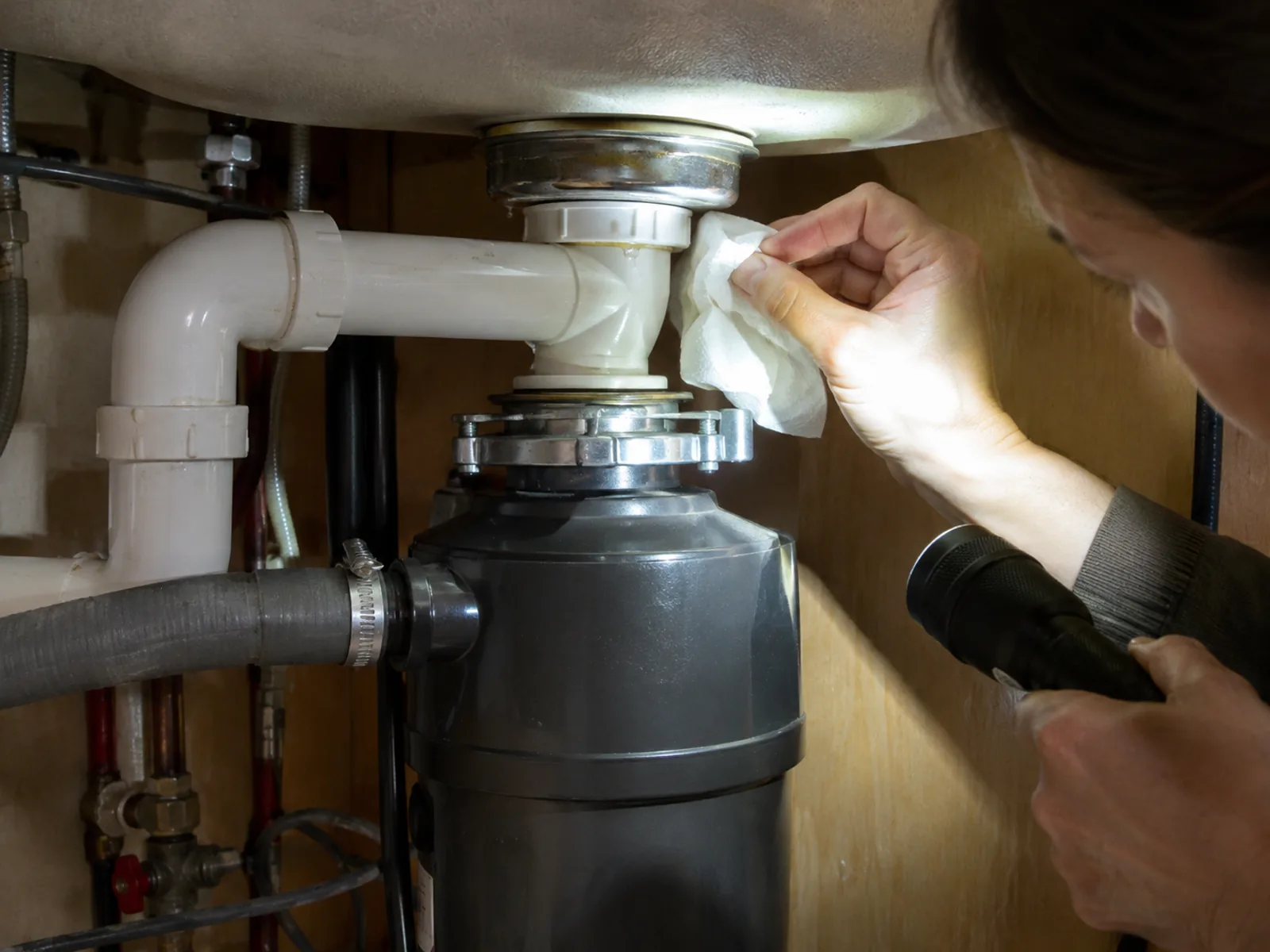
Find the first drop
- Empty the cabinet and dry the disposal base, pipes, shutoff valve, and cabinet floor.
- Place separate strips of dry paper under the flange, side fitting, and bottom of the housing. This helps show which area gets wet first.
- If power is isolated, no electrical part is wet, and the installation is stable, run a small amount of cold water into the sink without switching on the disposal. Stop at once if a drop reaches the cord or outlet.
- If no leak appears, check nearby sources such as the faucet, water filter, or dishwasher drain hose. Do not restore power until you confirm electrical parts are dry.
InSinkErator recommends placing paper under the cabinet to spot moisture and comparing different operating stages. To keep the check cautious, do not run the disposal until you have ruled out water near electricity or wiring.
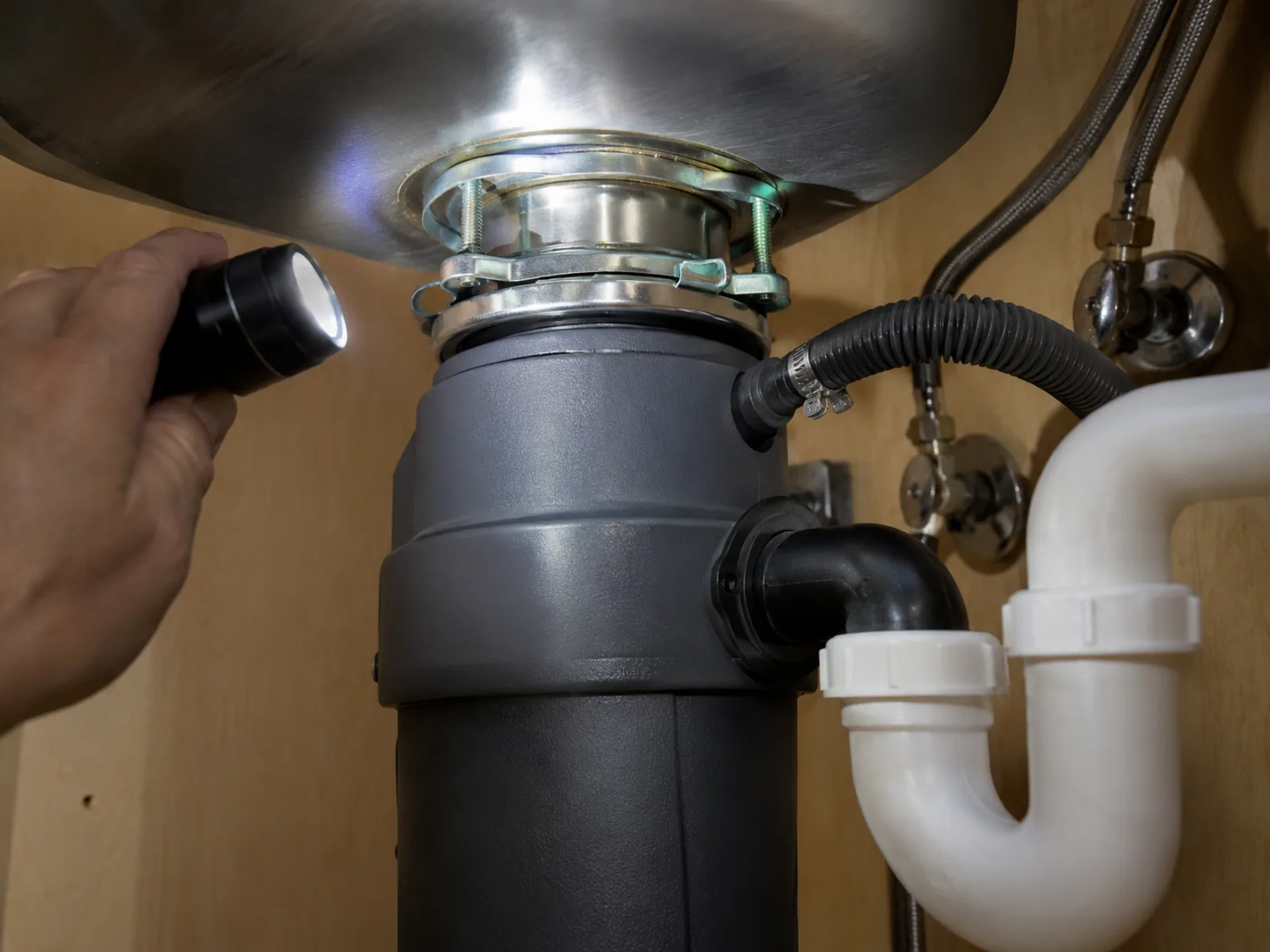
If a connection is leaking
Identify the fitting and record the disposal’s complete model number. A flange leak can involve the mounting assembly; a discharge leak may involve its elbow gasket or designated screws. Mounting designs vary. Do not tighten parts at random: extra force will not repair a cracked plastic fitting or a misassembled mount.
If the unit was recently installed, check its installation instructions and ask the installer to inspect the mount and seal. If you do not have the manual, use the manufacturer’s official troubleshooting page for the exact model. InSinkErator lists the discharge fitting, gasket, and elbow among its checks; Moen and other makers may use different hardware.
If water appears to come from the bottom of the housing
Check: the housing is dry above. If water truly starts at the base, leave the unit off and contact the maker.
Dry the underside and make sure no drop is running down from an upper connection. InSinkErator advises confirming that the source is not the mounting assembly or another point, then contacting support if water truly leaks from the bottom. This can indicate an internal seal or housing failure. Replacing an internal seal would require disassembling a heavy appliance exposed to both electricity and water.
Do not patch the housing with sealant or keep using it. A plumber can remove and replace the unit after safely isolating power, water, and drain connections. If water reached an outlet, cord, or floor beneath an electrical appliance, do not touch the area until power has been cut from a dry location.
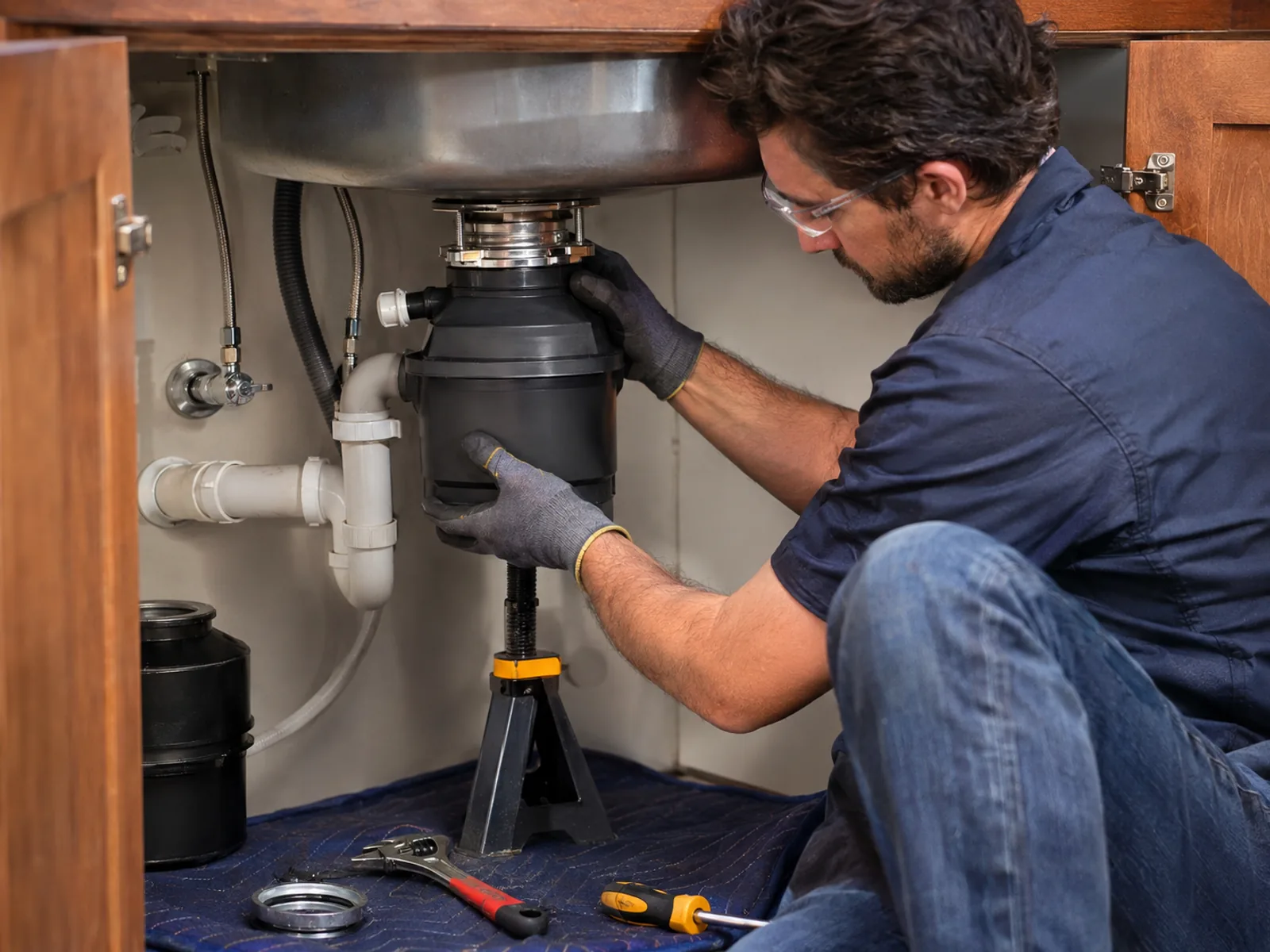
Common mistakes
- Assuming the housing leaks because water pooled beneath it.
- Restoring power to test the disposal while water is near an outlet or cord.
- Tightening a cracked plastic clamp or dismantling the mount without supporting the unit.
- Applying sealant to the housing or gluing a crack as a permanent repair.
- Running a dishwasher into a leaking disposal or continuing to use an unidentified leak.
When to stop and call a professional
Stop if water comes from the lower housing, reaches an electrical part, a fitting is cracked, the disposal moves, or you would need to support it to reach a mount. Contact the maker or a plumber if the source remains unclear or the leak returns after a repair performed according to the manual.
Frequently asked questions
Why is my garbage disposal leaking from the bottom?
Water may run down from a higher connection; a confirmed leak at the bottom may also be internal. Dry the area and locate the first wet point before deciding.
Can a disposal leaking from underneath be repaired?
The manufacturer may recommend inspection or replacement when water comes from the lower housing. Do not patch or dismantle it under the sink; have the unit diagnosed.
How do I tell if the discharge fitting is leaking?
Dry the parts and place separate paper strips beneath the flange, elbow, and trap. The first area to become wet is more useful than a pool that has spread.
Can I use the disposal while looking for a leak?
Avoid running it when water is near the plug, cord, or electrical parts. A power-off visual check is safer; stop if water reaches an electrical area.
Next step
If the disposal hums or stays silent without a leak, use our garbage disposal troubleshooting guide. For another appliance leak example, see our guides to a leaking refrigerator and a coffee machine leaking underneath. The disposal’s own manual remains the reference for its fittings.
Sources
- InSinkErator, distinguishing garbage disposal leak locations, accessed November 16, 2026.
- InSinkErator, leak at discharge connection, accessed November 16, 2026.
- InSinkErator, leak at mounting assembly, accessed November 16, 2026.
Last updated: November 16, 2026.
Be the first to leave a comment.