Water in the bottom of a dishwasher does not always mean a fault. A small clean reserve visible only in the sump below the filter can be normal on some models. Cloudy water covering the flat tub floor, returning after a drain, or remaining after every completed cycle usually indicates incomplete drainage or wastewater backing up. Diagnose the timing and appearance first, then follow the drain path without opening panels unnecessarily.
Normal sump water or a drainage problem?
Wait until the program has ended and the water has cooled. Remove the lower rack. Whirlpool states that a small amount can remain in the filter area to keep seals from drying; the owner’s manual defines what is normal for a specific model. Water above the filter, carrying grease, food or odor, is different.
| Observation | Useful hypothesis | Next action |
|---|---|---|
| Small clean reserve below filter only | May be normal | Compare with the manual and monitor |
| Dirty water above filter after cycle | Blocked filter, pump or hose | Clean filter and test drain |
| Tub empties, then refills hours later | Sink backflow or leaking inlet valve | Observe water color and close supply |
| Heavy foam | Hand dish soap or excess detergent | Stop and let suds collapse |
| Water on floor or in base pan | Leak, not tub drainage | Isolate power and water |
Safety before removing the filter
Cancel the program as the manual directs, unplug the appliance or isolate its circuit, and close the water valve before moving it. Wear gloves because glass may hide in cloudy water. Never tilt a full machine. Do not reach into an unfamiliar pump design or force a cover. Electrical odor, tripped protection, a floor leak, or water entering while the appliance is off requires the appliance to remain isolated for professional service.
Step-by-step checks before disassembly
- Confirm the cycle ended. A power cut, open door or cancellation can leave process water. Use the manufacturer’s Cancel/Drain function once.
- Remove and inspect the water. Record level, color and odor before sponging it out.
- Clean the filters. Remove only manual-approved parts, rinse with warm water and use a soft brush rather than an abrasive pad.
- Inspect the sump. With power isolated, use a flashlight and carefully remove accessible labels, seeds or glass.
- Check the visible hose. Look for kinks, crushing and a low sag under the sink.
- Run one short drain test. Refit and lock every cover and filter before restoring power.
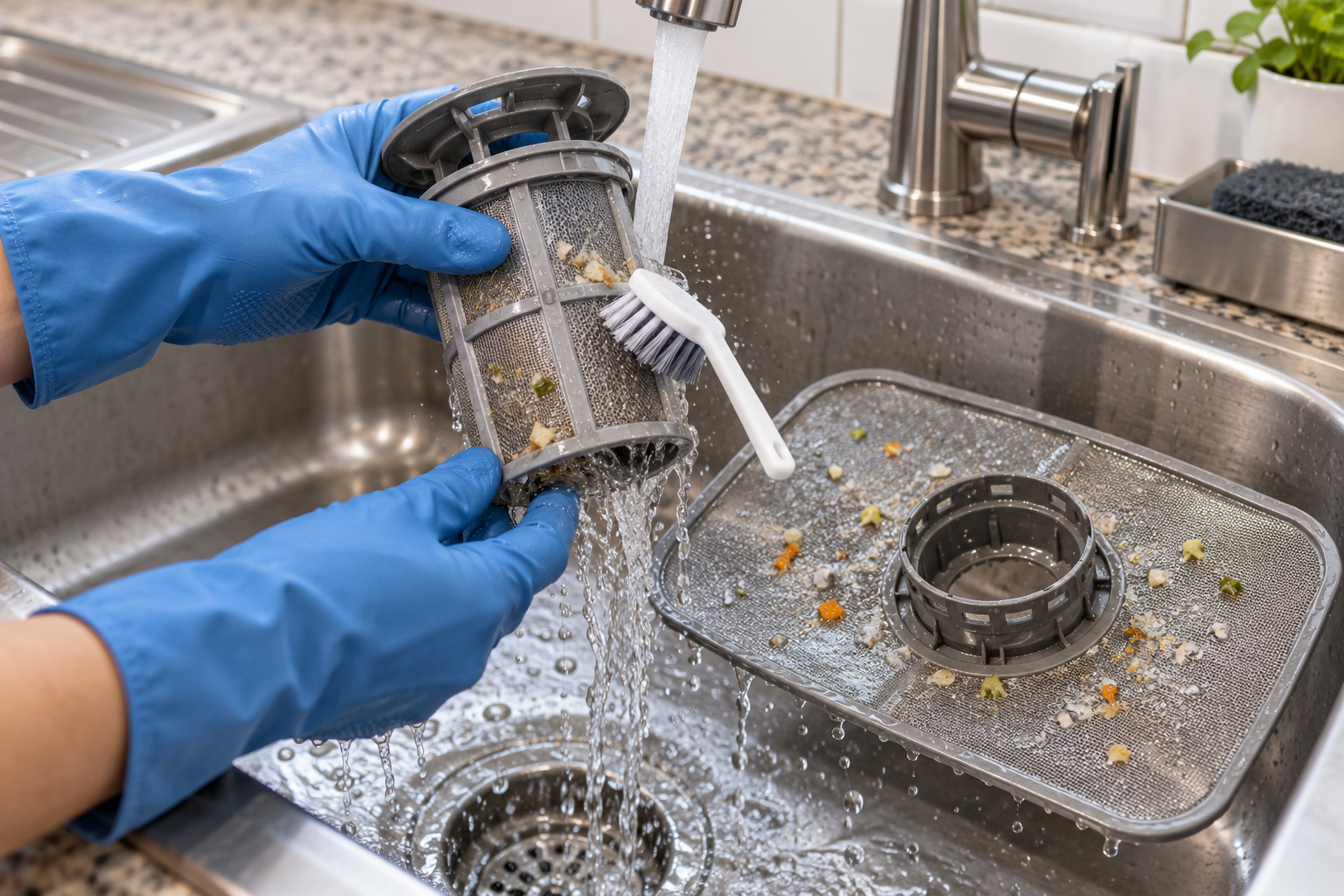
What pump noise can and cannot prove
A hum with no level change suggests a blocked impeller, restricted passage or a pump turning without useful flow. It does not prove the motor is healthy. Silence can mean no command, no supply, an open winding or a jam. Sound narrows the branch; it does not confirm a failed component.
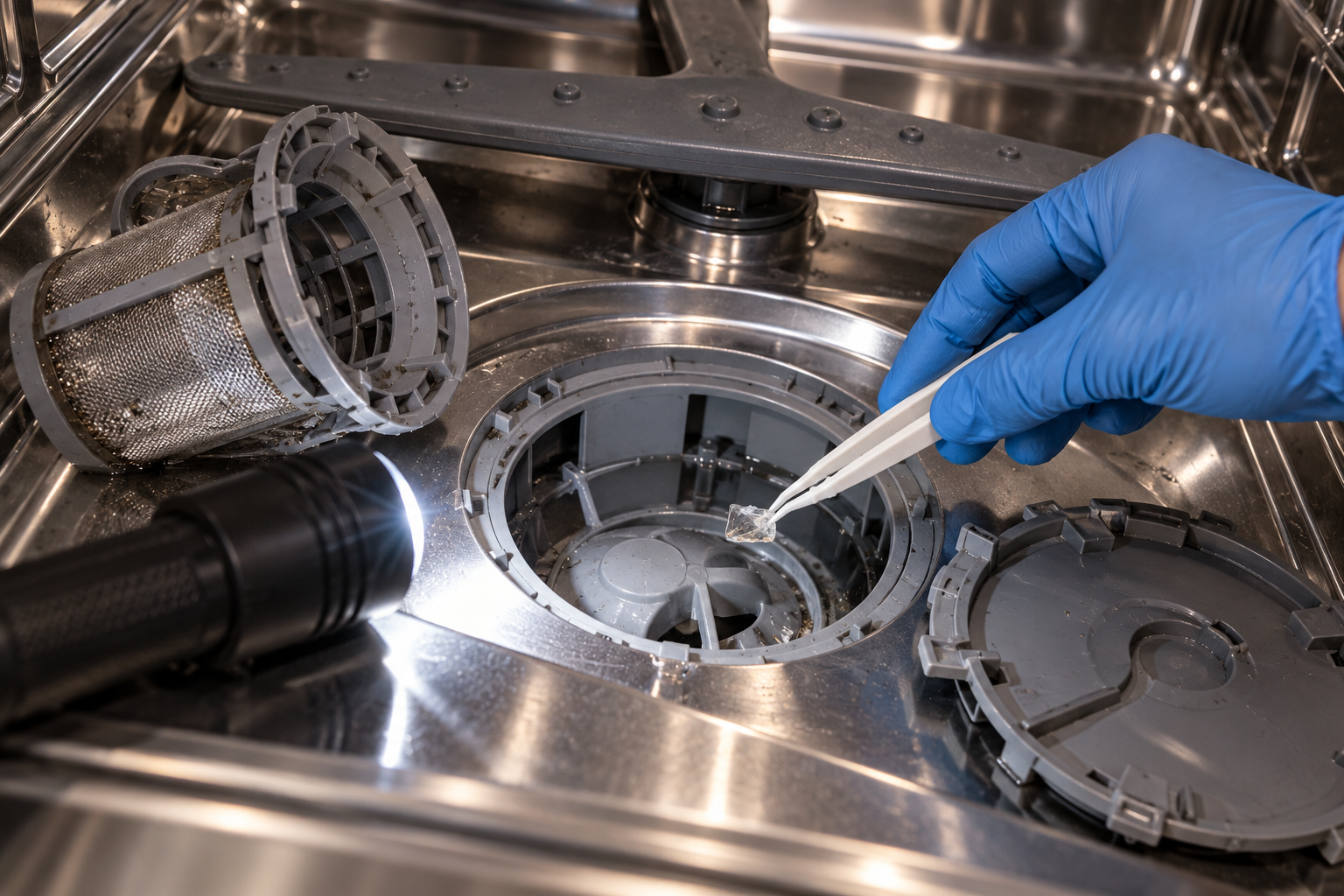
Drain hose, sink connection and backflow
If the tub drains and water later returns, check whether it is dirty and whether the sink gurgles. AEG advises checking the trap connection when wastewater flows back into the dishwasher. Route the hose exactly as the installation guide specifies, often with a secured high loop or an approved air-gap arrangement. A high loop reduces backflow risk but cannot clear a blocked drain.
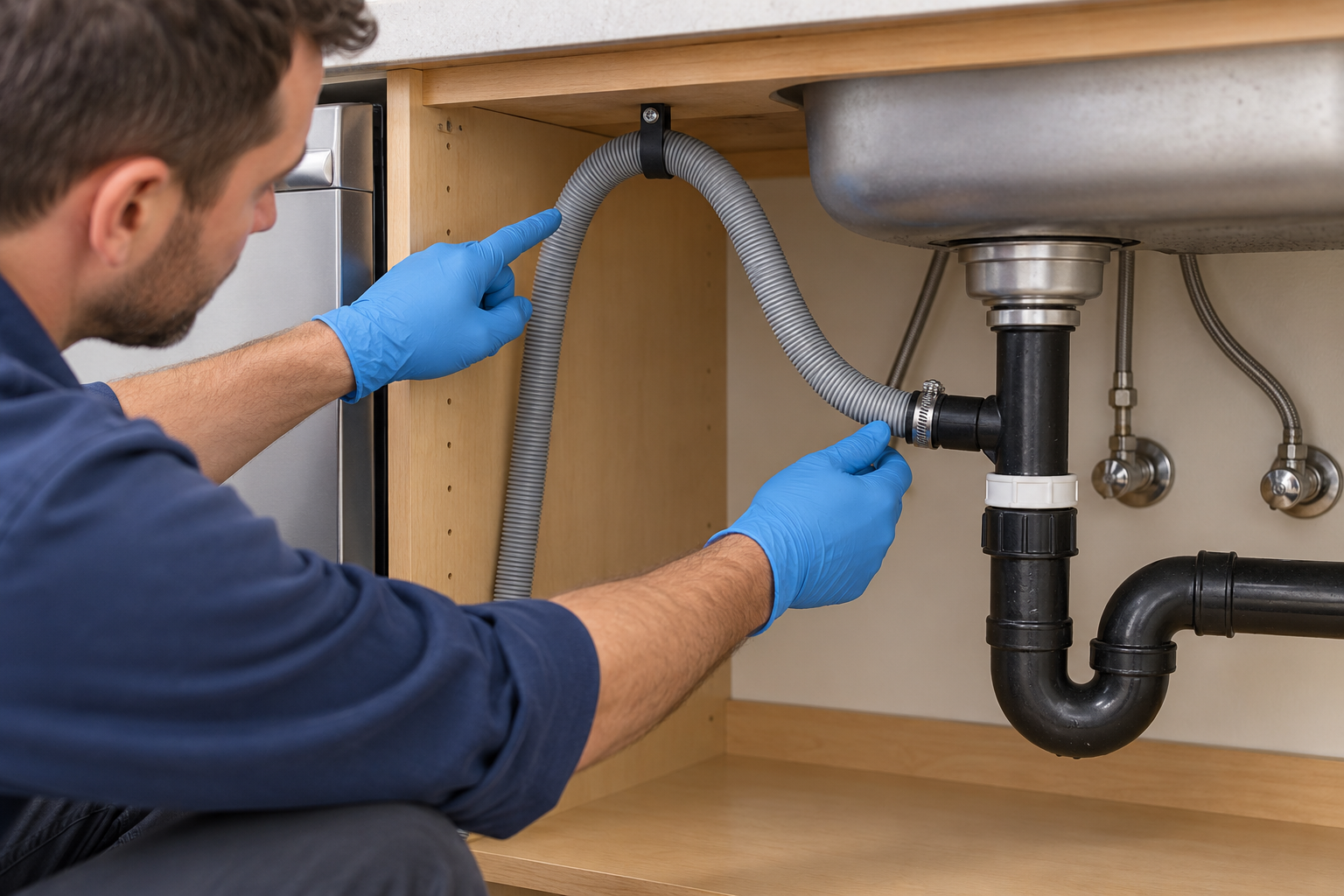
Bucket flow test, when safely accessible
With power isolated, a competent person may disconnect the hose at the sink fitting, secure it in a low bucket, restore power and briefly command Drain without touching the hose. Strong flow points toward the sink fitting or downstream plumbing. Weak flow after filter cleaning points toward the hose or pump. This can flood a cabinet and is not appropriate when the connection cannot be reached safely.
Interpret the test rather than guessing a part
| Result | Cautious interpretation | Decision |
|---|---|---|
| Complete drain, no return | Accessible obstruction likely removed | Run an empty rinse and monitor |
| Good hose flow but sink backup | Trap or downstream drain restriction | Service the plumbing |
| Pump hums, water stays | Remaining blockage or no pump output | Stop and use model-specific service |
| Silent pump with drain code | Pump, wiring, control or sensing fault | Professional electrical diagnosis |
| Clean water enters while off | Possible leaking inlet valve | Close supply and arrange repair |
Mistakes that make the problem worse
- Do not pour chemical drain cleaner into the tub.
- Do not use hand dishwashing liquid in an automatic dishwasher.
- Do not repeat cycles while a pump hums without moving water.
- Do not confuse tub water with water in the leak-protection base. See the Bosch E15 guide for that separate symptom.
- Do not condemn a pump from sound alone. Check the exact model and use the error-code finder.
Three scenarios that change the diagnosis
The problem started after installation
Prioritize hose routing and the new sink connection. A hose crushed while the appliance was pushed into place, an unopened connection plug, or routing that ignores the installation guide can prevent the first drain. Do not apply a universal loop height: use the model’s installation instructions and the actual trap arrangement.
Water returns while the dishwasher is unused
Sponge the tub dry and leave the appliance off with its water supply valve closed. If water no longer returns, the inlet path or inlet valve becomes relevant. If dirty water appears when the sink is used, wastewater backflow becomes more likely. This observation separates the fill and drain circuits without an electrical measurement.
The fault is intermittent
Record the program, load, stop point and displayed code. A poorly locked filter can pass debris; a flexible hose may kink only when the machine is pushed back; a partly restricted drain may accept a slow flow but back up during a fast pump-out. Photos of the water level before and after a drain command give a technician useful evidence without pretending to measure flow.
After drainage returns to normal
Run an empty rinse, inspect the sink cabinet and toe-kick area for drips, then confirm that only the model’s expected sump reserve remains. Clean the filter at the interval in the manual, remove jar labels and scrape large food remains. These measures reduce blockages without inventing an unnecessary daily maintenance routine.
Frequently asked questions
Will vinegar unblock the drain?
No. It may affect light mineral residue but cannot remove glass, labels or a compacted hose blockage.
Can I restart immediately?
Only after all parts are locked in place, dirty water is removed and no leak is present. Use one short rinse and stop if the level does not fall.
When is service justified?
After checking the filter, accessible sump and visible hose, or immediately for leaks, electrical symptoms, an inaccessible pump, a persistent code or filling while switched off.
Technical sources
- Bosch, Dishwasher not draining, accessed October 29, 2026.
- Whirlpool, Water remains at end of cycle, accessed October 29, 2026.
- AEG, Water in the bottom of the dishwasher, accessed October 29, 2026.
- Miele dishwasher manual, drain-pump cleaning, accessed October 29, 2026.
Be the first to leave a comment.