On applicable Bosch washer families, E17/F17 means the water-supply time was exceeded. Check the tap, flow, and visible hose first, then confirm the code in your model manual.
Symptoms · Diagnosis · Steps · When to stop · FAQ · Sources
Symptoms of E17 or F17
The washer stops during filling or waits longer than expected for water. Bosch associates E17/F17 with the water-supply time being exceeded; pressure may be low, a tap closed, or a hose filter blocked. Some families display variants. Confirm the exact code and model before using a fix.
Diagnosis table
| Symptom | Likely cause per Bosch | Next action |
|---|---|---|
| E17/F17 during filling | Water supply is impaired or the time limit was exceeded | Check the tap and visible hose, then find the exact manual. |
| Low flow at the tap | Household water supply may be insufficient | Ask a plumber to check the supply/pressure. |
| Code after hose work | Inlet filter or AquaStop obstruction, or incorrect connection | Follow only the maintenance steps for your model. |
| Leak, cracked hose, or tripped breaker | Unsafe fault or water damage risk | Close the tap if safe and call a professional. |
Safe checks, in order
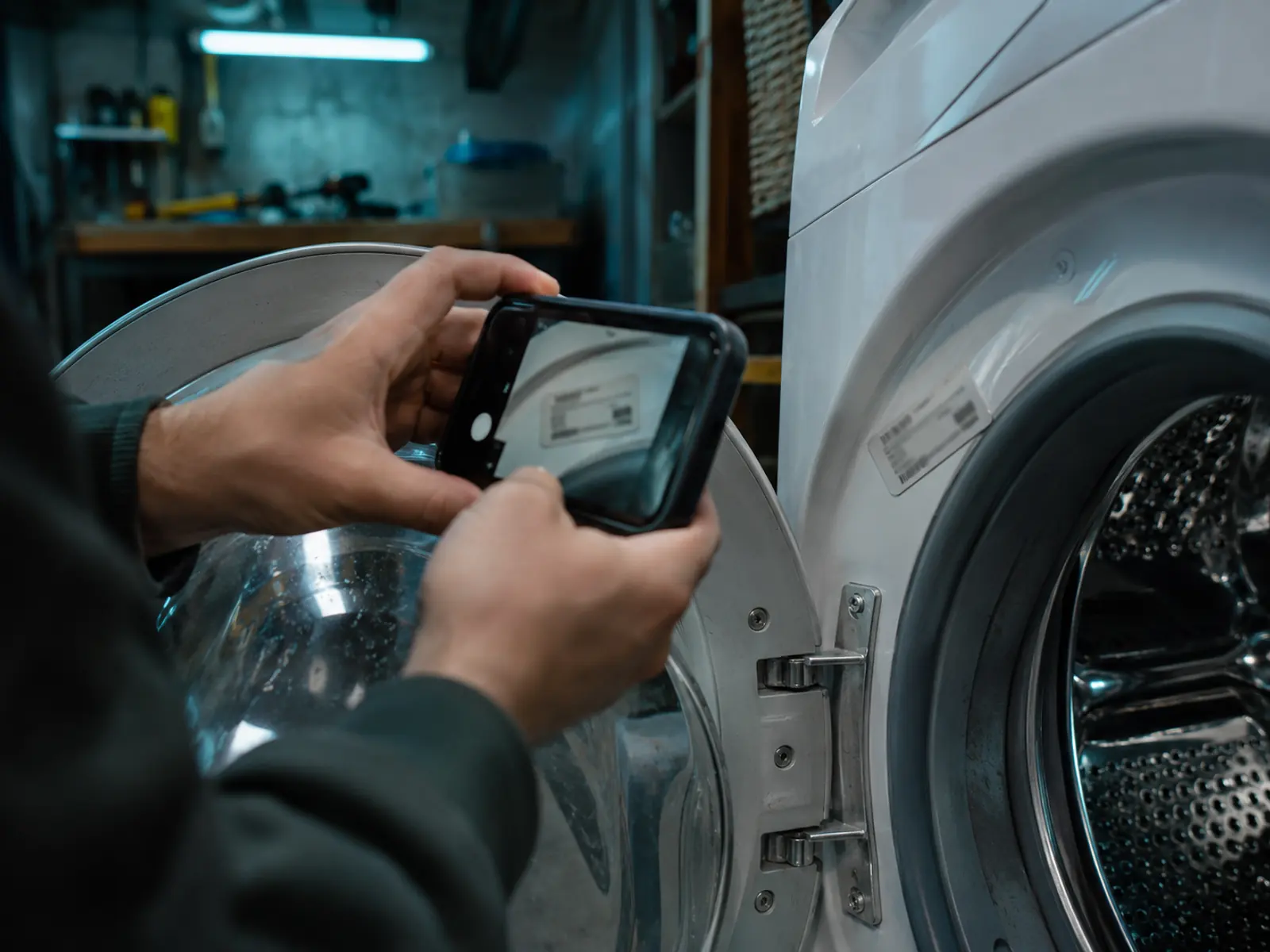
Photograph the code and record the full Bosch model. Search Bosch support for E17/F17 and open the manual for that rating label. Do not confuse E17 with E18, which concerns drainage on listed washer families.
Check: the manual describes the same code. If it didn't work: give the exact model to Bosch Support.
Confirm the water tap is fully open. Inspect only the visible hose for a kink, crush, or leak. Do not pull a fitting or open a pressurized hose.
Check: the hose is clear and the floor remains dry. If it didn't work: close the tap if water leaks and call a plumber.
Request a flow check if supply seems weak. Bosch gives about 10 litres per minute from a fully open tap in its published procedure. This is the value in Bosch's check, not a substitute for your model's specifications or a plumber's assessment. Do not dismantle plumbing if unsure.
Check: flow meets Bosch's guidance and connections remain dry. If it didn't work: ask a plumber to inspect the supply rather than forcing a valve or changing pressure.
Clean an inlet filter only if the manual lists it as user maintenance. Turn off the water and unplug the washer; follow Bosch's sequence. AquaStop hoses contain electrical parts and must not be immersed. Refit everything as instructed.
Check: no seepage appears at the tap or washer connection. If it didn't work: stop and contact Bosch.
Run one cycle after restoring the water supply. Stay nearby during filling. Do not keep resetting if E17 returns.
Check: the drum fills and the code does not return. If it didn't work: note when filling stops and request diagnosis.
When to stop and call a technician
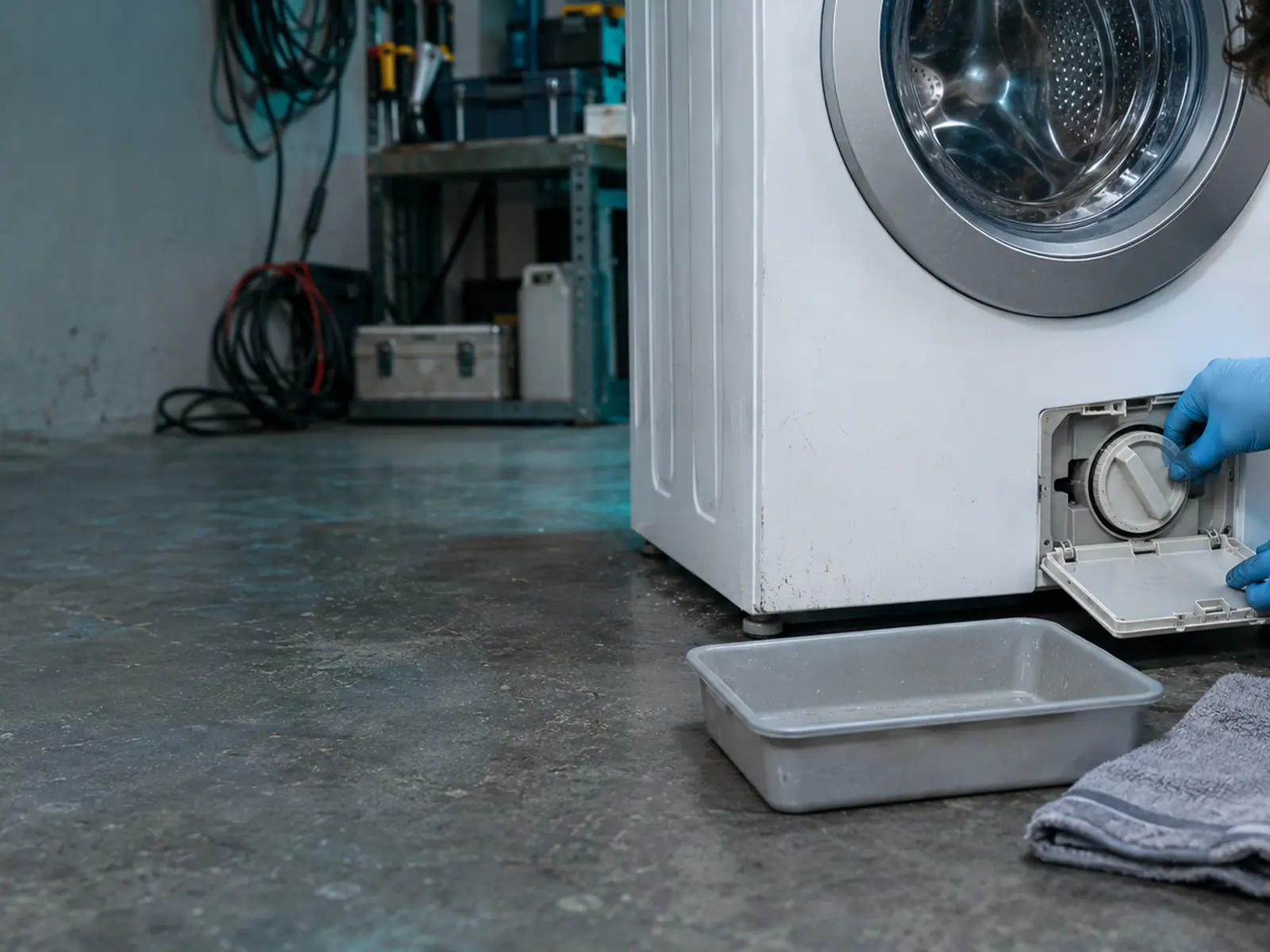
Stop for a leak, cracked hose, water near an outlet, unusual noise, hot plug, or tripped breaker. Never remove the back panel to inspect a valve or wiring. Low pressure is a plumbing issue; an internal valve, sensor, or control requires a technician.
Documented Bosch examples
Bosch support pages list E17/F17 for products associated with references including WAE28310FF/57 and WAJ2018SME/18. Those product pages confirm support documentation, not a repair test on either washer. Bosch also gives an approximately 10 L/min tap-flow indication for its published troubleshooting procedure; no ElectronixLab measurement was provided.
Read the check correctly
A flow observation at the tap does not necessarily describe the flow reaching the washer after its hose and filter are connected. Bosch gives 10 L/min as a reference in its procedure, but a low result must be interpreted in the context of the home plumbing and appliance manual. Do not try to measure if you lack a suitable container or the tap leaks. Ask a plumber for help.
Record whether the fault appears on every cycle or after a water interruption. Notice whether other taps in the home also have low flow. These observations can separate a household supply issue from a washer-hose issue without opening the appliance. A building water outage, recent plumbing work, or a moved hose may explain a sudden change; they are clues, not proof.
Do not confuse the inlet-hose filter with the drain filter. They have different jobs and access steps. Cleaning a drain-pump filter will not fix slow incoming water. Do not replace an inlet valve before confirming that water reaches the appliance connection. Use the manual and a professional diagnosis to decide what comes next.
After work on the water connection, watch it during the first fill. A small pressurized leak can damage the floor even when the cycle appears normal. If the washer is built in, stacked, or difficult to reach, do not move it alone to inspect the back. Arrange a safe inspection.
FAQ
Do E17 and F17 mean the same thing?
Bosch groups them for water-supply time on several pages, but the exact model manual comes first.
Does E17 prove the inlet valve failed?
No. The tap, pressure, hose, or inlet filter can also restrict water.
Can I remove the hose to clean a filter?
Only if the manual gives that procedure. Shut off water and unplug; do not immerse an AquaStop part.
What if flow is low?
Ask a plumber to check the supply. Do not improvise a pressure adjustment.
The code returns after cleaning. What next?
Stop repeated attempts and contact Bosch with the model, code, and cycle stage.
Related guides and next step
- Washer will not start
- Compare a washer error-code hub
- Tell a fill problem from a drain blockage
- Use the ElectronixLab error-code finder
Bosch sources
- Bosch — Washer Error Codes (accessed November 7, 2026).
- Bosch — E17/F17 (accessed November 7, 2026).
- Bosch — WAE28310FF/57 and WAJ2018SME/18 (accessed November 7, 2026).
Be the first to leave a comment.