E18/F18 points to a water-flow condition on some Bosch washer families. Record the model and check its manual before touching a hose or filter.
Symptoms · Diagnosis · Steps · When to stop · FAQ · Sources
Symptoms: E18 or F18 on the display
The code may appear during draining or when the washer detects a water-flow issue. Bosch associates E18/F18 with a blocked pump or a kinked/restricted inlet hose on some support pages. Water may remain in the drum, but the code alone does not prove the pump has failed. Variants and maintenance access depend on the model.
Diagnosis table
| Symptom | Possible cause | Next action |
|---|---|---|
| E18/F18 and water remains | Possible drain restriction on applicable models | Check the manual; inspect the external hose and filter only if user-accessible. |
| E18 with an empty drum | Another variant or model-specific meaning | Search Bosch support using the exact model number. |
| Visible hose kink | Restricted water flow | Correct visible routing without loosening connections. |
| Leak, smell, or tripped breaker | Potentially unsafe fault | Stop and call service. |
Safe checks, from simple to more involved
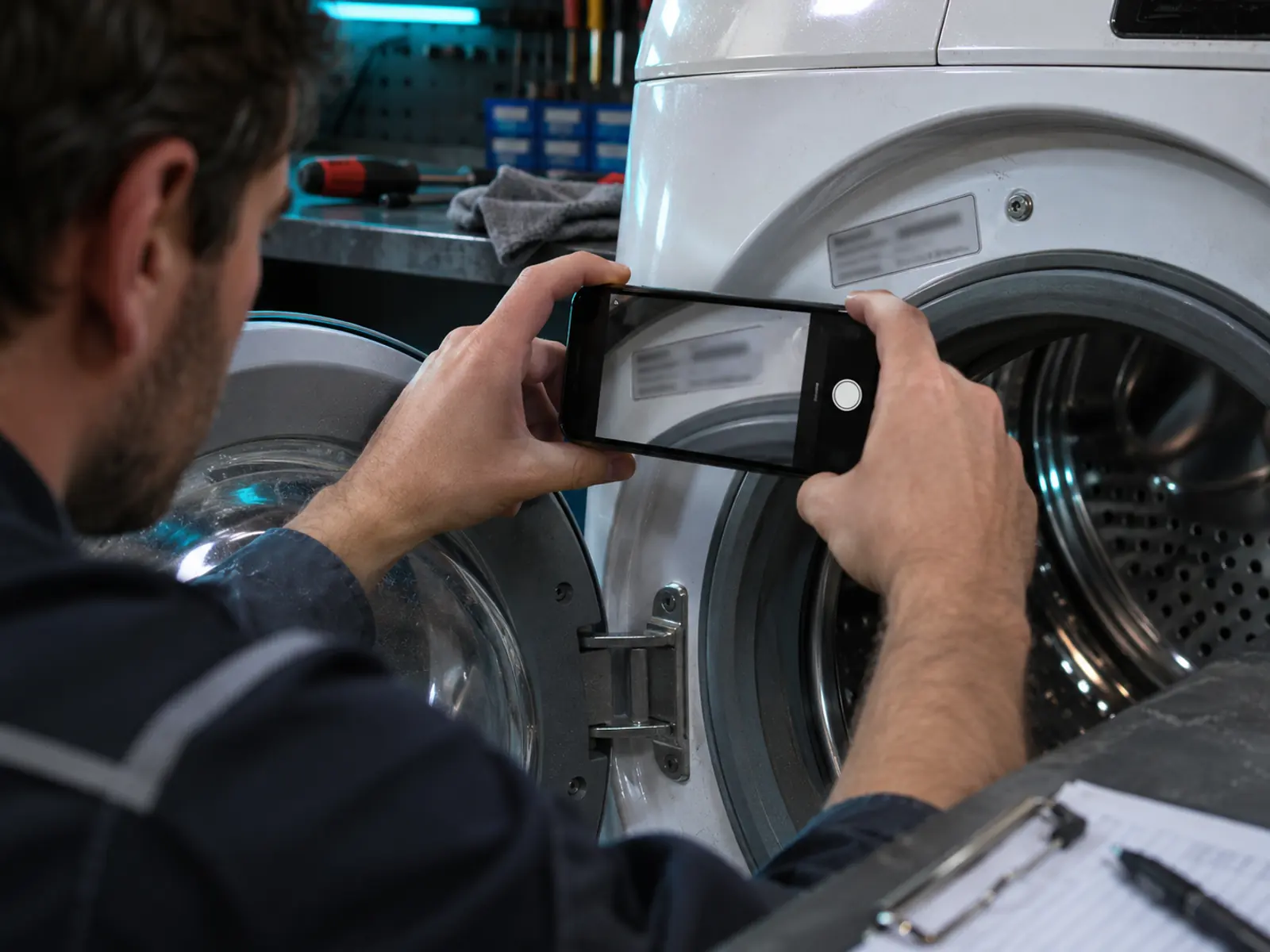
Record E18/F18, the cycle, and full model number. Photograph the display and find the manual that matches the rating label. Do not use a definition from another country or series.
Check: Bosch support shows the exact model. If it didn't work: send Bosch a label photo without posting the serial publicly.
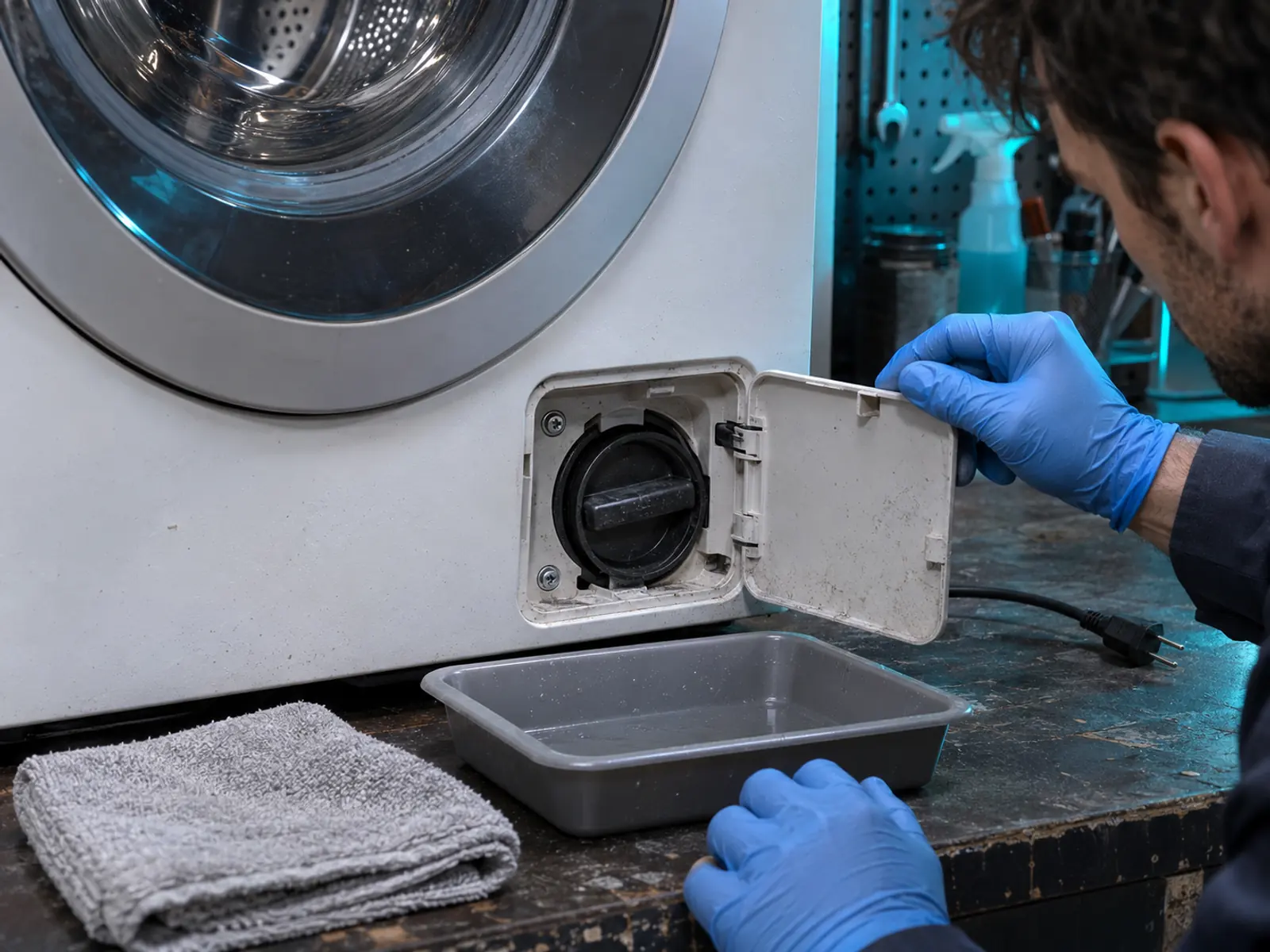
Stop the cycle and unplug before any maintenance allowed by the manual. Let water cool. Prepare a shallow tray and towels if the manual permits opening a user-accessible filter.
Check: power is off and the area is dry. If it didn't work: do not open the cabinet; arrange service.
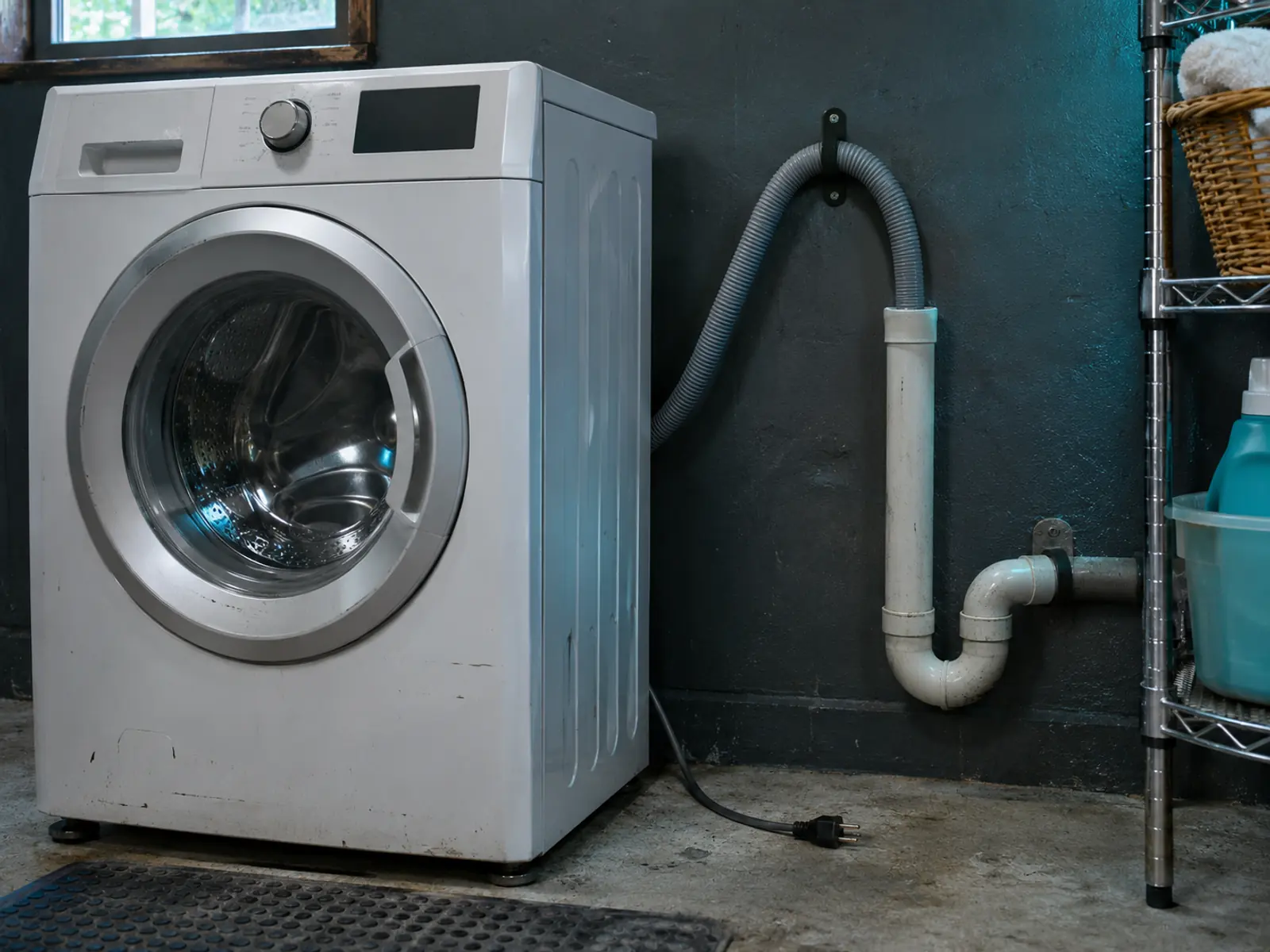
Inspect the visible hose without disconnecting it. Look for an obvious twist or crush. Do not pull out a stacked or built-in washer.
Check: the hose is not pinched or stretched. If it didn't work: leave fittings in place and consult the manual.
Clean a filter only if your manual lists it as user maintenance. Release water slowly and never force the cap. Do not remove a panel.
Check: the filter is secure and no leak appears. If it didn't work: stop and call Bosch service.
Run one drain test described in the manual. Stay nearby. If the code returns, do not keep resetting; record the result.
Check: the cycle finishes without the code, a leak, or unusual noise. If it didn't work: give the model and observations to a technician.
Read the signs before intervening
Record whether water remains in the drum, whether the cycle stops during draining, or whether the code follows a particular stage. These details help reproduce the fault; they do not prove that a pump or control board has failed. Never reach into the drum while the washer is plugged in or could restart.
An unusual sound, leak, or smell changes the risk. Stop the appliance and report the observation instead of repeating the programme. Also note whether the filter was recently opened and whether the floor stays dry after it is refitted. The complete Bosch product reference and its manual take priority over a generic code list.
When to stop and call a technician
Stop for an active leak, water near an outlet, burning smell, hot plug, repeated breaker trip, or grinding noise. Do not take live electrical readings or open the cabinet. Internal pump, wiring, and control checks belong to a qualified professional.
Documented examples
The Bosch E18 page groups several variants and does not publish before-and-after measurements for a user repair. Two observations help service without diagnosing a failed part: water remains after the washer stops, or the code appears when the drum is already empty. Also note whether the external hose was recently moved.
Bosch manuals are searched by model; a product family alone does not establish the exact code meaning or filter design. ElectronixLab test details were not provided.
How to interpret what you observe
Slow draining, water left in the drum, and a visibly kinked hose are separate observations. Record them separately. A clear-looking hose does not prove the filter, pump, or internal pipe is clear; an empty drum does not prove the drain system is healthy. This prevents ordering a part from the display alone.
The code may also look different across control generations. Photograph the whole display, not just the characters; segmented displays can make letters look alike. Compare the photo with the model manual rather than an unofficial list. If the manual does not describe the code, give Bosch Support the exact model and product reference and ask for the correct procedure.
After any approved check, watch the first complete cycle. Stop if water appears underneath, filling does not stop, a new mechanical noise starts, or the breaker trips. Do not bypass a door lock or reach wiring. Water left after a cycle may still be hot, so keep away from internal parts.
A filter clean that does not help is not a reason to open the cabinet. On many appliances, electrical parts and water paths sit close to residual water. Further work can require model-specific tools, parts, and procedures. A technician can inspect the circuit against the service documentation and decide whether a component actually needs replacement.
FAQ
Does E18 always mean a blocked pump?
No. Bosch says meanings depend on the washer; a restricted hose or another condition may be involved.
Are E18 and F18 identical?
Some Bosch pages group them, but confirm the variant in your model manual.
Can I open the filter with a full drum?
Only if the manual allows it. Water can flow quickly, so prepare containers and release it slowly.
Should I reset it several times?
No. Follow at most one Bosch procedure. If the code returns, stop trying.
What should I tell a repairer?
Give the code, model, cycle stage, whether water remains, noises, and external checks made.
Related guides and next step
- Washer will not drain
- Slow draining without a code
- Drain pump keeps running
- Use the ElectronixLab error-code finder
Official Bosch sources
- Bosch — Washer Error Codes (accessed November 7, 2026).
- Bosch — E18 in display (accessed November 7, 2026).
- Bosch — model-based manuals (accessed November 7, 2026).
Be the first to leave a comment.