A refrigerator can seem much louder after the lights go out because the room is quiet and the appliance runs in cycles. A soft hum, brief click, airflow sound, gurgle or occasional crackle can accompany cooling, defrost and refrigerant movement. The useful question is whether the sound is new, continuous, harsh, changing, linked to a loose contact, or accompanied by a change in temperature. Listen and observe before moving or opening anything.
Describe the sound and when it occurs
- Note the selected programme and indicators.
- Press the documented command once and observe.
- Record any change or displayed code.
Record a short sample from a safe distance and note its timing: after a door opens, when the compressor starts, during ice making, after a defrost period, or continuously. Do not place a phone behind the appliance or reach near moving parts. Identify whether it is a hum, click, rattle, hiss, gurgle, scrape or repeated knock. The sound category narrows possibilities but does not diagnose a component by itself.
| Sound and pattern | Common operating explanation | What would change the assessment |
|---|---|---|
| Low steady hum that rises and falls | Compressor and fans maintaining temperature | Sudden sustained loudness, poor cooling or overheating |
| Soft whoosh or airflow | Circulation fan running | Repeated scraping as if a fan contacts ice; service is appropriate |
| One click as operation starts or stops | Switching or relay action | Repeated failed starts with warming compartments |
| Gentle gurgle or trickle | Refrigerant flow or defrost water | Water leak or abnormal cooling; inspect separately |
| Rattle synchronized with compressor | Cabinet, floor or loose external item vibrating | Metallic impact from inside or noise despite stable contact |
Why the sound is more noticeable at night
System.Text.RegularExpressions.MatchEvaluatorThe compressor and fans do not necessarily work harder at night. With fewer competing sounds, a normal cycle can simply become audible. The refrigerator may also run after a door has been opened, after warm groceries were loaded, or while recovering its set temperature. Variable-speed compressors can change pitch as they adjust output. A brief regular sound that fades or varies with the cooling cycle is different from a new grinding noise that persists regardless of the cycle.
Listen for a pattern rather than judging one isolated moment. Note whether the sound stops when the compressor pauses, whether an internal fan sound changes when the door opens, and whether it returns in a similar way later. Some fans stop when a door switch is activated, while others behave differently; do not hold or defeat a switch to test it. Compare only with the model manual and normal operating descriptions.
Check simple external vibration sources
System.Text.RegularExpressions.MatchEvaluatorWith doors closed, remove objects resting on top or touching the cabinet. Check that bottles, jars, trays and shelves are seated and not vibrating against one another. If the refrigerator is newly installed or recently moved, confirm that it stands firmly on a solid floor and is not touching a cabinet, wall or pipe in a way that transfers vibration. Use the model’s levelling instructions; do not tilt a loaded refrigerator alone.
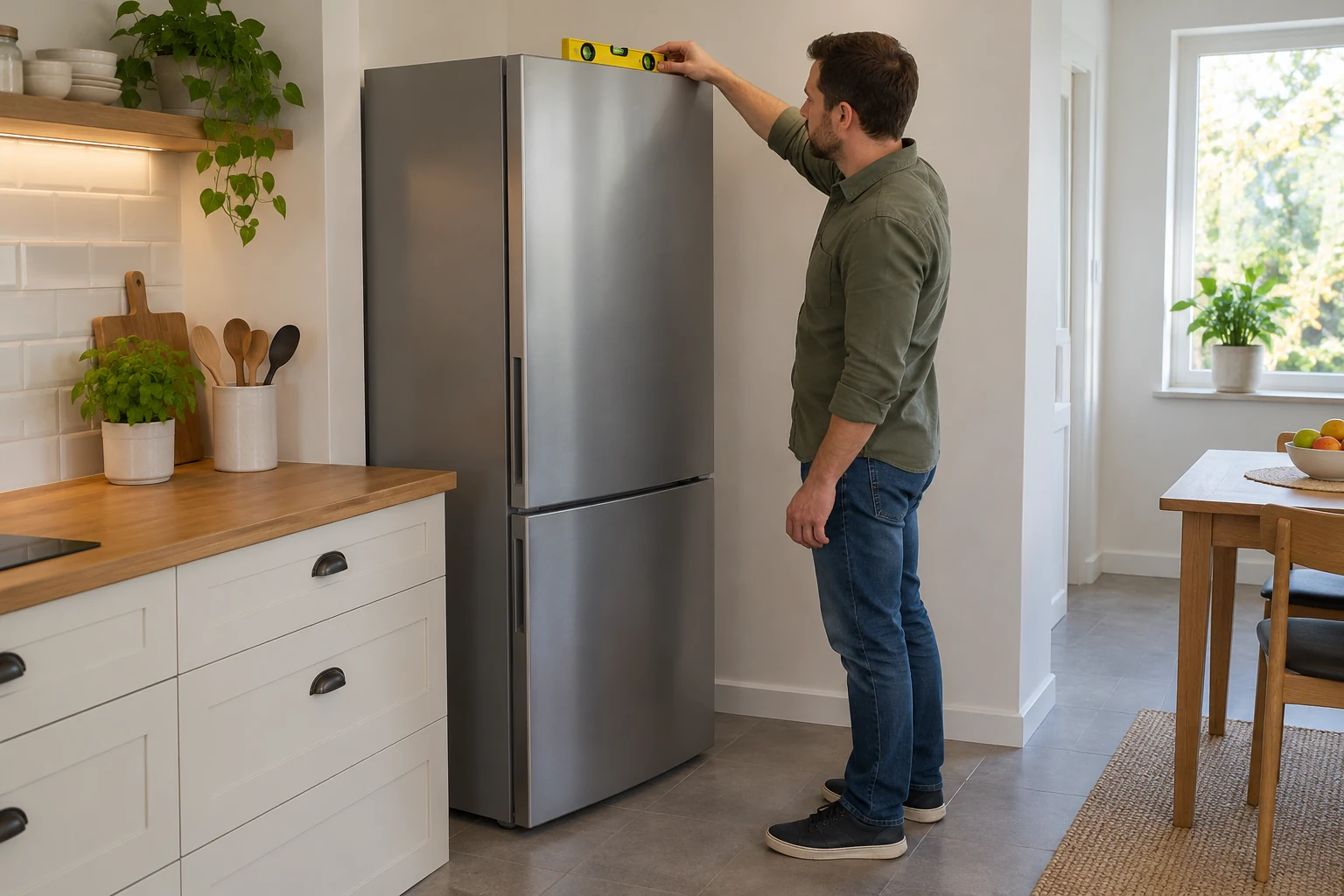
A helper can listen from the front while you lightly observe whether an exterior object or cabinet contact is the source. Do not touch a hot compressor compartment, reach through a grille, remove a rear panel or put fingers near a fan. Correct only an accessible loose object or contact. If the noise changes when that object is moved, the observation supports an external rattle; it does not establish that every other sound is normal.
Confirm ventilation without dismantling the appliance
System.Text.RegularExpressions.MatchEvaluatorLook around the outside for blocked ventilation space, packaging left after installation, dust visible at an accessible grille, or a refrigerator pressed tightly against surrounding surfaces. Required clearances differ by model, so use the installation manual. If cleaning an accessible area is recommended, disconnect power only as the manual directs and use a gentle method; do not remove protective panels or vacuum near exposed wiring.
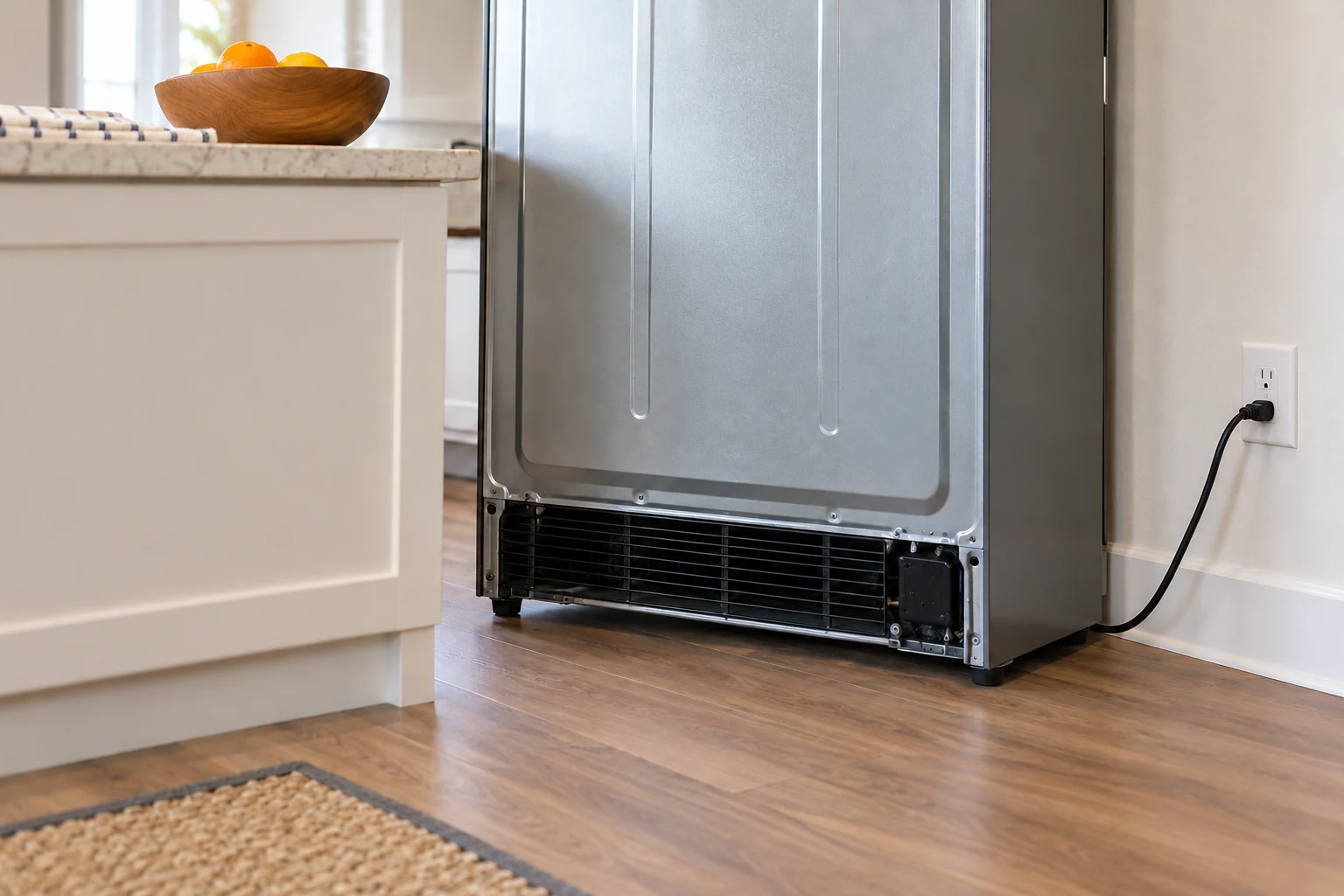
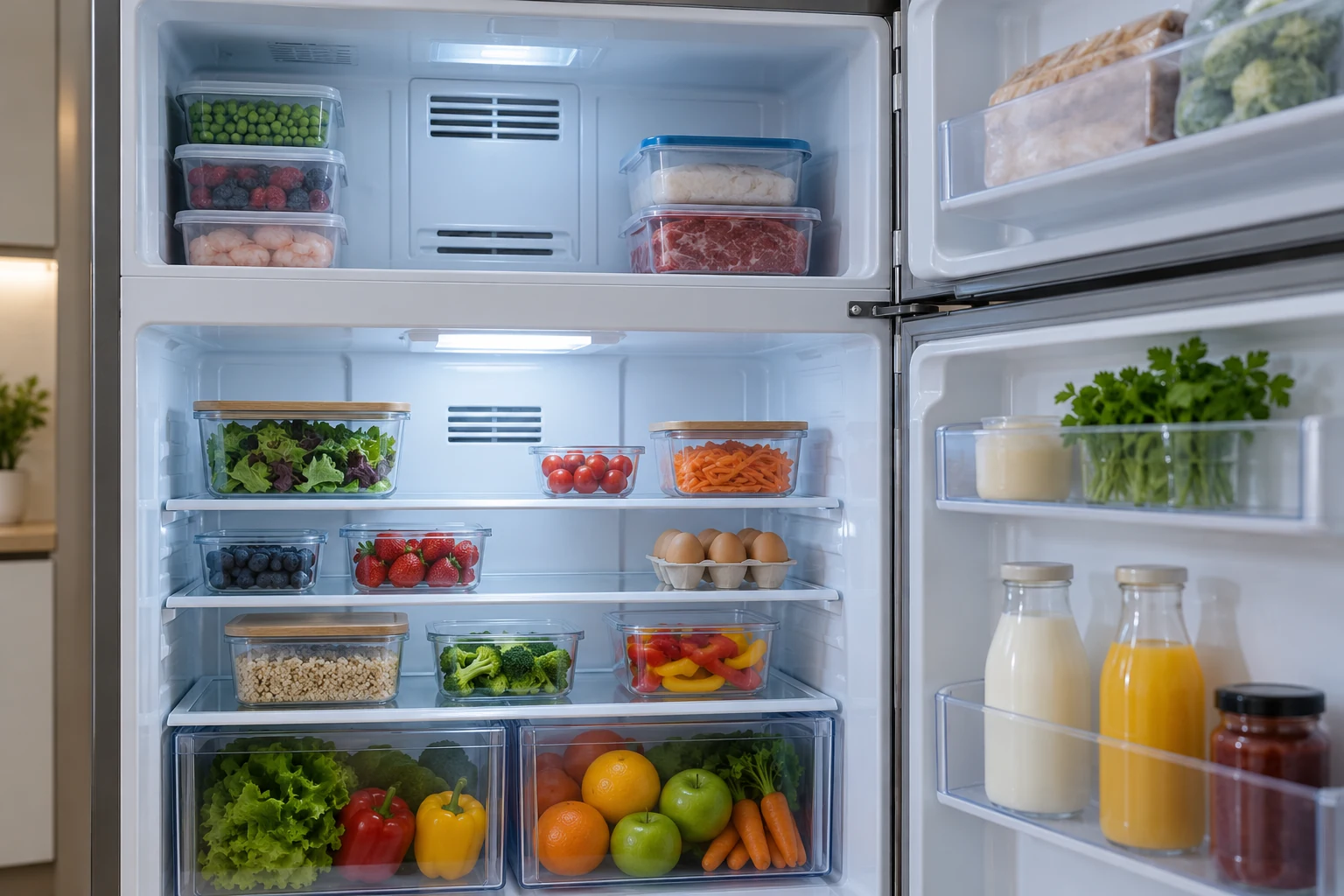
Inside, store food so it does not cover air outlets. A blocked vent can alter circulation and temperature recovery and may keep fans running longer. Do not move internal covers or poke through a vent. If the sound resembles a fan striking ice, especially alongside reduced cooling or repeated cycling, arrange service rather than defrosting components with sharp tools or heat.
Use temperature and performance as evidence
System.Text.RegularExpressions.MatchEvaluatorNoise and cooling are separate observations. Check the actual compartment temperatures with a suitable appliance thermometer if the sound is new or the food seems warmer; use the values and placement recommended by the manual. Do not infer safe food temperature from how cold the shelves feel. A normal hum with stable temperatures is less concerning than a loud persistent noise paired with warming food, a warning display, or a compressor that repeatedly clicks without running.
Keep the doors closed while observing. Repeated opening changes the cooling load and can make the appliance run longer, obscuring the original pattern. If the refrigerator has a temperature alarm, record its message. A light, beeping alarm or warm compartment should be treated as a cooling problem even if the sound itself may be ordinary.
Distinguish sound from warning signs
System.Text.RegularExpressions.MatchEvaluator| Finding | Reasonable interpretation | Next step |
|---|---|---|
| Quiet, intermittent hum or gurgle; temperatures stable | Often consistent with normal operating cycles | Compare with model documentation and monitor |
| Rattle changes when a removable object is moved | External contact may be transmitting vibration | Keep the object clear and check stability |
| Fan-like scraping, new grinding or repeated hard knocks | Possible obstruction, wear or internal contact | Do not open the appliance; arrange assessment |
| Repeated start clicks with poor cooling or alarm | Operation may not be completing normally | Protect food and contact service |
| Burning smell, smoke, hot plug or electrical crackle | Potential electrical hazard | Keep clear, isolate power only if safe, seek urgent qualified help |
When to request service
System.Text.RegularExpressions.MatchEvaluatorSeek service if a new harsh noise persists, a fan seems to strike ice, the cabinet vibrates strongly despite stable positioning, the compressor repeatedly attempts to start, or temperatures rise. Stop using the appliance and seek qualified help if there is smoke, a burning smell, sparking or a hot/damaged cord. Do not open the sealed cooling system: refrigerant circuits and electrical components are not user-serviceable.
Provide the model number, approximate age, sound description, when it starts and stops, any display code, and refrigerator/freezer temperatures. A short recording made from a safe position can help a technician distinguish a rhythmic cycle from continuous friction. It cannot confirm a failed part without inspection.
How to compare a new sound with the appliance’s own cycle
For one evening, keep a simple log rather than repeatedly opening the doors. Record the approximate time, whether the compressor was already running, and whether the sound was brief or continuous. A steady low hum that changes pitch and fades is different from a repeating knock at fixed intervals. After a door opening, a longer cooling run can be expected because warm room air entered; this context matters when comparing nights.
If you use a phone recording, hold it at the same safe location each time and keep the refrigerator closed. Phone microphones automatically change gain, so the apparent loudness is not a calibrated sound measurement. A recording is useful for describing rhythm and timbre to service, not for comparing decibel levels or proving a bearing fault.
Ice makers and water-connected models
A model with an ice maker or water dispenser can produce valve buzzes, brief fills and ice dropping into a bin. If an ice maker is installed but the water line is not connected, follow the manual to disable the ice maker; a valve trying to fill without supply can make noise. Do not alter household water pressure based on a general internet number; the required range and test belong to the exact model and installation. If a water line is leaking, shut off its accessible supply if safe and address the leak separately.
Noise while dispensing is also different from a sound that occurs with all doors closed and no one using ice. Note whether the sound follows a fill or dispense event. A repeated buzz with no water connection calls for checking the model instructions, not dismantling the valve.
Recent installation, cleaning and seasonal changes
A newly installed refrigerator may sound different as it cools the compartments and settles into its location. A move can also leave the cabinet touching a wall, furniture or a water pipe. Check level and clearances only as described in the installation guide; some appliances require time to stand upright after transport before power is restored. If the unit was recently cleaned, confirm removable shelves and bins are fully seated and not vibrating.
Room temperature and door-opening frequency affect cooling demand. During warm weather or after loading groceries, fans and compressor may run longer. That alone does not confirm a defect, but a compartment that cannot maintain its expected temperature or a warning alarm should be acted on independently from sound.
Frequently asked questions
System.Text.RegularExpressions.MatchEvaluatorIs a refrigerator that hums at night faulty?
Not necessarily. A low changing hum can come from the compressor or fans during ordinary cooling, and quiet surroundings make it more noticeable. A sudden loud hum with warming food or repeated failed starts deserves attention.
Why does it click every so often?
A single click can occur as controls switch operation on or off. Repeated clicks paired with no sustained cooling are different; record the pattern and consult model support.
Should I pull the refrigerator away from the wall?
Check the required installation clearance in the manual first. Do not drag a heavy appliance or strain a water line or power cord. Ask for help if it must be repositioned.
Can I remove the panel to see whether the fan is hitting ice?
No. Keep panels and guards in place. A scraping fan sound is a reason to request qualified inspection, especially if cooling is affected.
Sources consulted
System.Text.RegularExpressions.MatchEvaluator- Whirlpool: normal refrigerator sounds and external vibration checks (consulted 1 November 2026).
- Whirlpool: high-pitched and pulsating noises (consulted 1 November 2026).
- Samsung: understanding refrigerator noises (consulted 1 November 2026).
- Whirlpool France: refrigerator sounds (consulted 1 November 2026).
Be the first to leave a comment.