Water heater replacement cost is easiest to judge after every quote describes the same job. A low headline price may cover only the appliance and a basic swap; another estimate may include removal, new venting or electrical work, code-related items, startup and warranty coverage. Compare scope first, then compare totals.
This guide separates U.S. and French price references instead of converting one market into the other. The figures below are published guide ranges, not a quote for your home. Your installer must inspect the site and confirm the exact model, capacity and work.
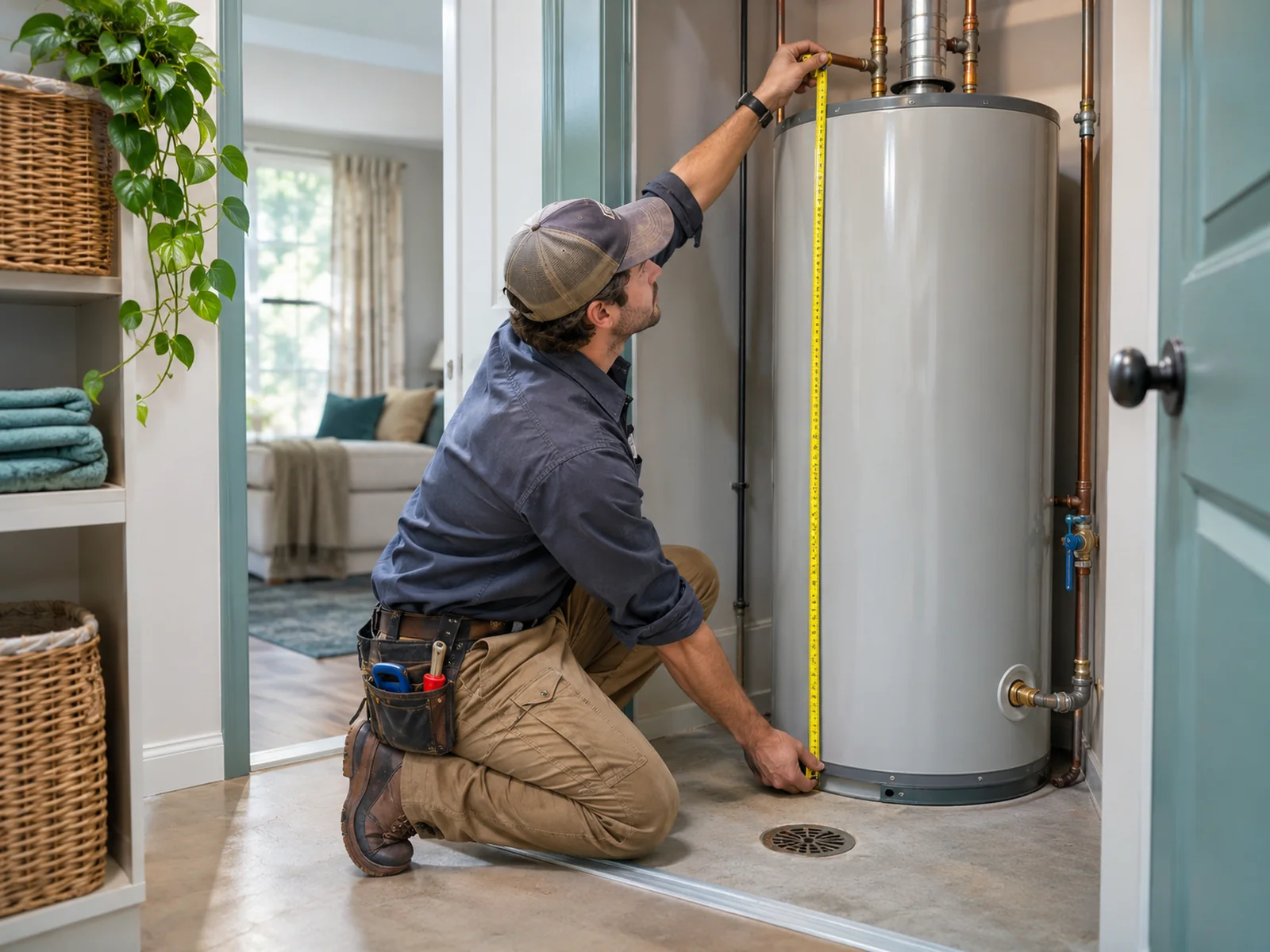
What replacement estimates usually include
A useful estimate identifies the unit and the work needed to make it operate in the existing home. Ask for the equipment brand and model, tank capacity or rated output, energy source, efficiency information, labor, old-unit removal, materials, disposal, startup and warranty. If a line is described only as “miscellaneous,” ask what it covers.
| Quote line | What to compare | Question to ask |
|---|---|---|
| Water heater | Type, model, capacity, fuel and efficiency | Is this the exact unit being installed, or an allowance? |
| Labor and access | Removal, transport, stairs, tight closets and setup | What site conditions could change this price? |
| Connections | Water, fuel or electrical connections, venting and condensate where relevant | Which existing parts are reused, and which are replaced? |
| Finishing items | Drain pan, valves, piping, disposal, permits or inspection fees when required locally | Are these included, excluded or conditional? |
| Closeout | Startup checks, haul-away, documentation and warranty | Who handles service if the new unit has a problem? |
Not every home needs every line. For example, a like-for-like tank in an accessible utility room can be a different project from changing fuel type, moving the heater, adding a new vent route or fitting a heat-pump model in a confined space. The estimate should describe the actual proposed scope rather than assume every optional upgrade is required.
Published price references: United States and France
U.S. examples
The Home Depot’s replacement guide gives its nationwide reference ranges as $1,600–$2,400 for standard tank installation, $2,400–$5,400 for tankless installation and $2,500–$5,000 for hybrid heat-pump installation. These are Home Depot’s published service ranges, not a government survey or a guaranteed local price. They do not tell you whether a specific quote includes unusual access, relocation, new electrical capacity, vent changes, disposal or other site work. Use them to frame questions, then compare written estimates for the same model and scope.
French example ranges
Travaux.com’s price guide, updated August 21, 2026, shows a broad €450–€6,500 installed range depending on energy source, capacity and project complexity. It lists €850–€1,750 for an electric model, €750–€1,600 for gas, €2,200–€4,300 for a heat-pump model and €3,000–€6,500 for solar. These are figures from a third-party commercial guide, not an official national tariff or a quote for your home. Included work and local conditions can differ.
Keep each price reference in its own market and currency. Converting dollars into euros does not account for local labor, equipment ranges or the work included.
How to compare quotes line by line
- Match the equipment. Put the brand, model, capacity, fuel or energy source and efficiency rating side by side. If a quote uses an allowance, ask when it will be replaced with the selected model’s price.
- Normalize the scope. Mark each job as included, excluded or conditional: disconnecting and removing the old unit, moving the heater, modifying pipes, fuel or electrical connections, venting, condensate drainage, haul-away, permits or inspections where applicable, and cleanup.
- Identify assumptions. Ask what the price assumes about access, the existing connections, the location, water quality and the condition of nearby materials. Ask for any likely additional work and the approval process before it begins.
- Compare operating fit. Check that the proposed capacity and recovery performance fit household demand. For a heat-pump water heater, confirm that the room, air movement, condensate handling and sound are acceptable for that model. DOE guidance separates product efficiency from installed project cost; lifetime energy use is a useful second comparison, not a substitute for a complete installation quote.
- Compare the closeout. Confirm startup, user instructions, warranty terms, service contact, taxes, payment schedule and the validity period. Keep the written estimates so a later change can be compared with the agreed scope.
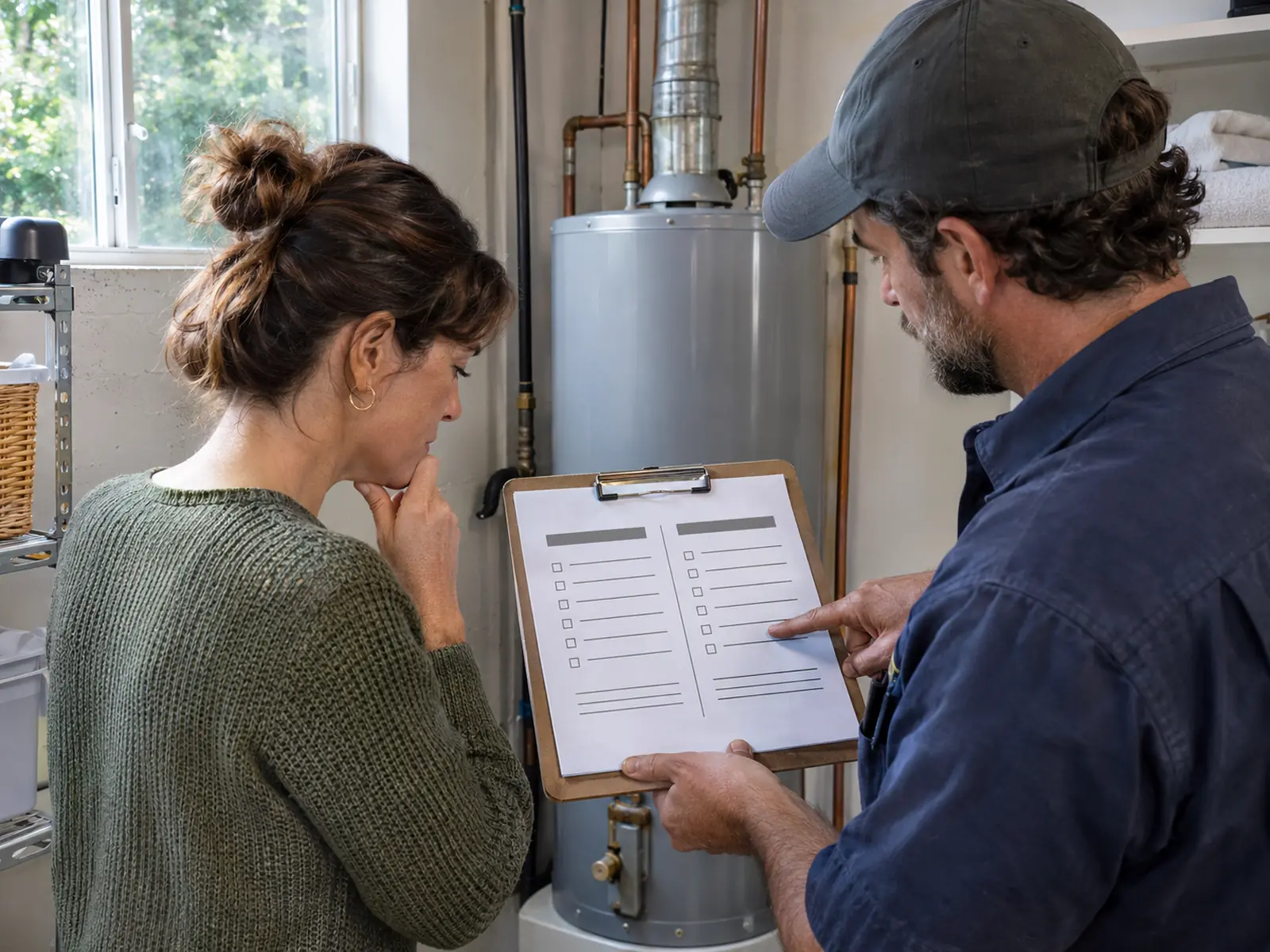
Why the equipment choice changes the total
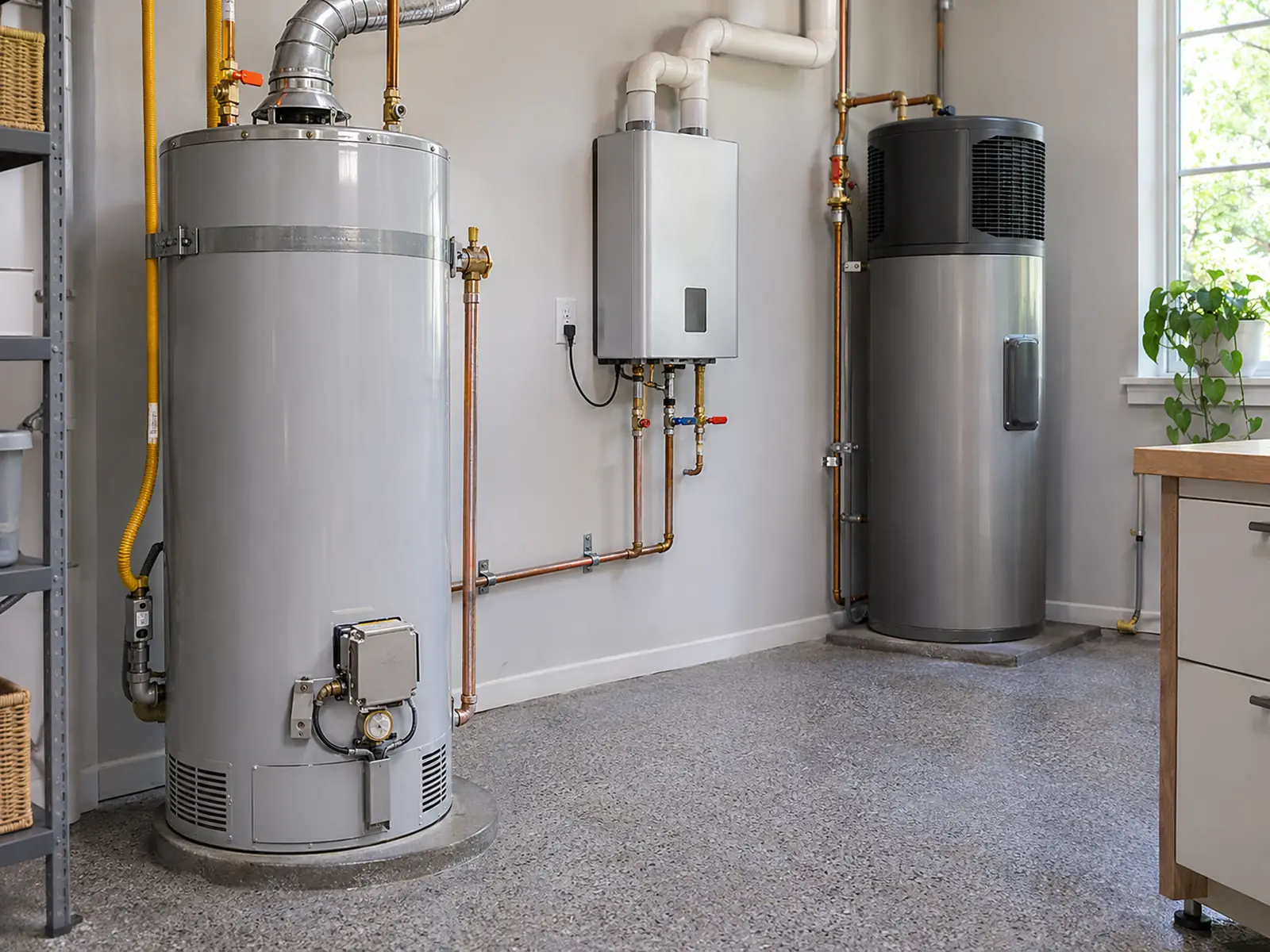
A storage tank keeps a volume of hot water ready; its capacity, energy source, recovery rate and physical dimensions affect the choice. A tankless unit heats water as it is drawn and may require a different fuel supply, vent arrangement or electrical setup. A heat-pump water heater moves heat from surrounding air into the tank and needs a suitable location and a way to handle condensate. These are distinct product configurations, not interchangeable line items.
Ask the installer to show how the proposed size was selected from your household’s hot-water use, simultaneous demand and the product’s specifications. Avoid choosing solely by the old unit’s label: a previous tank may have been oversized, undersized or selected for a different pattern of use. Also ask whether a proposed efficiency upgrade changes the total project scope, not just the appliance price.
A worked quote comparison
Consider two illustrative quotes for the same model in the same location. These made-up figures demonstrate the arithmetic; they are not collected contractor prices or market estimates. Assume both quote on the same tax basis.
| Item | Quote A | Quote B |
|---|---|---|
| Initial total | $1,850 | $2,100 |
| Old-unit removal | $150 extra, confirmed in writing | Included |
| Permit and inspection allowance | $100 extra, confirmed in writing | Included |
| Comparable total | $2,100 | $2,100 |
The initial $250 gap disappears once both scopes match. If an excluded item is still unpriced, mark the total incomplete rather than entering zero. Next compare warranty, schedule and conditional work. Do not add an allowance again when it is already part of the total.
Compare running cost separately
Use annual energy consumption for the proposed model and your own tariff when available. Rated electrical input multiplied by 24 hours assumes continuous operation and can badly misrepresent a water heater that cycles. For a simple estimate with a defensible run-time assumption, use the electricity cost calculator; the result excludes installation, maintenance and changing tariffs.
Keep the itemized quote and energy comparison together. For other household equipment, the home-appliance guide archive and repair guide library cover separate diagnosis and maintenance topics.
Frequently asked questions
How much does water heater replacement cost in the U.S.?
One national retailer’s published service guide gives $1,600–$2,400 for standard tank installation, $2,400–$5,400 for tankless, and $2,500–$5,000 for hybrid heat-pump installation. Local scope and site conditions can move a real quote outside those reference ranges.
Does the lowest quote usually include removal and disposal?
Not necessarily. Check the written scope for disconnecting, removal, transport and disposal of the old unit. If the quote is silent, ask before comparing totals.
Should I compare the same tank capacity?
Compare capacity and performance that fit your household, but do not assume the old tank size is automatically right. Ask each installer to explain the sizing basis and identify the exact model in the estimate.
Is a heat-pump water heater always cheaper to install?
No. Equipment cost, location, available space, air movement, condensate handling and connection changes affect the project. Compare the complete installation scope and consider operating energy separately using model-specific information.
Are these published ranges a guaranteed quote?
No. The U.S. numbers come from a retailer’s guide and the French figures from a third-party price guide. Neither can inspect your home or replace a dated, itemized estimate for the proposed work.
Sources and update note
- The Home Depot: Water Heater Replacement Cost Guide (U.S. service ranges; checked November 22, 2026).
- U.S. Department of Energy: Consumer Water Heaters (product types and definitions).
- U.S. Department of Energy FEMP: Purchasing Energy-Efficient Residential Water Heaters (efficiency and life-cycle purchase guidance; updated May 2024).
- Travaux.com: Prix du changement de chauffe-eau (French third-party price guide, updated August 21, 2026).
Last updated: November 22, 2026. Price references can change and do not replace an inspection or a written local estimate.
Be the first to leave a comment.