Heat pump maintenance combines simple homeowner checks with periodic professional service. You can monitor user-accessible filters, airflow openings, thermostat messages, and the outdoor unit’s surroundings. Electrical, refrigerant, and internal inspections must follow the manufacturer’s instructions and be handled by a qualified technician.
The exact schedule depends on model, climate, use, and system type (air-source, ducted, geothermal, or ductless). Use the installation and owner manuals rather than assuming one interval applies to every heat pump. This checklist helps you prepare for a heating season and spot changes in operation.
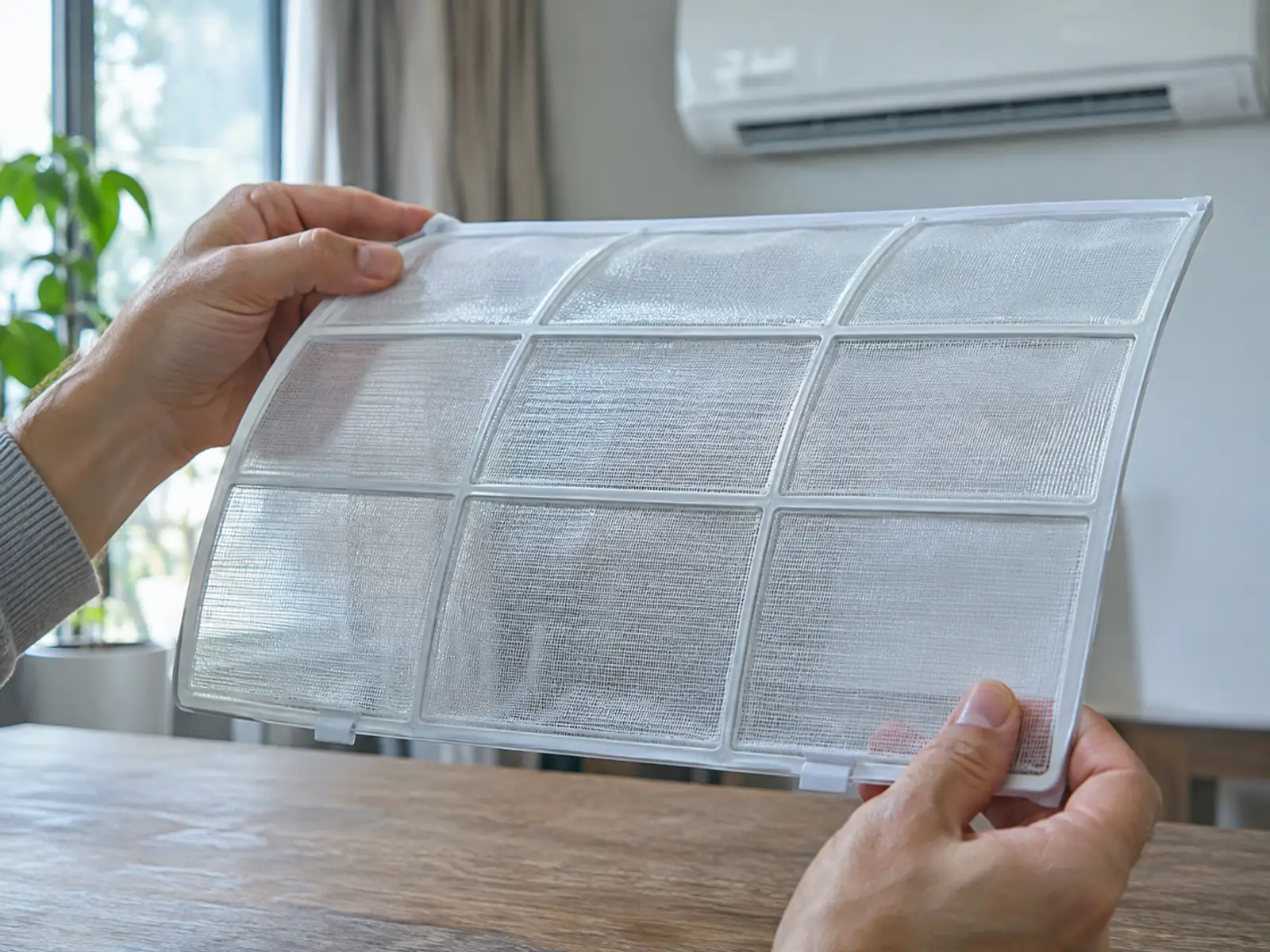
Quick checklist before heating season
- Record the brand, model, and manufacturer maintenance instructions.
- Check the user filter at the interval specified; clean or replace it according to its construction.
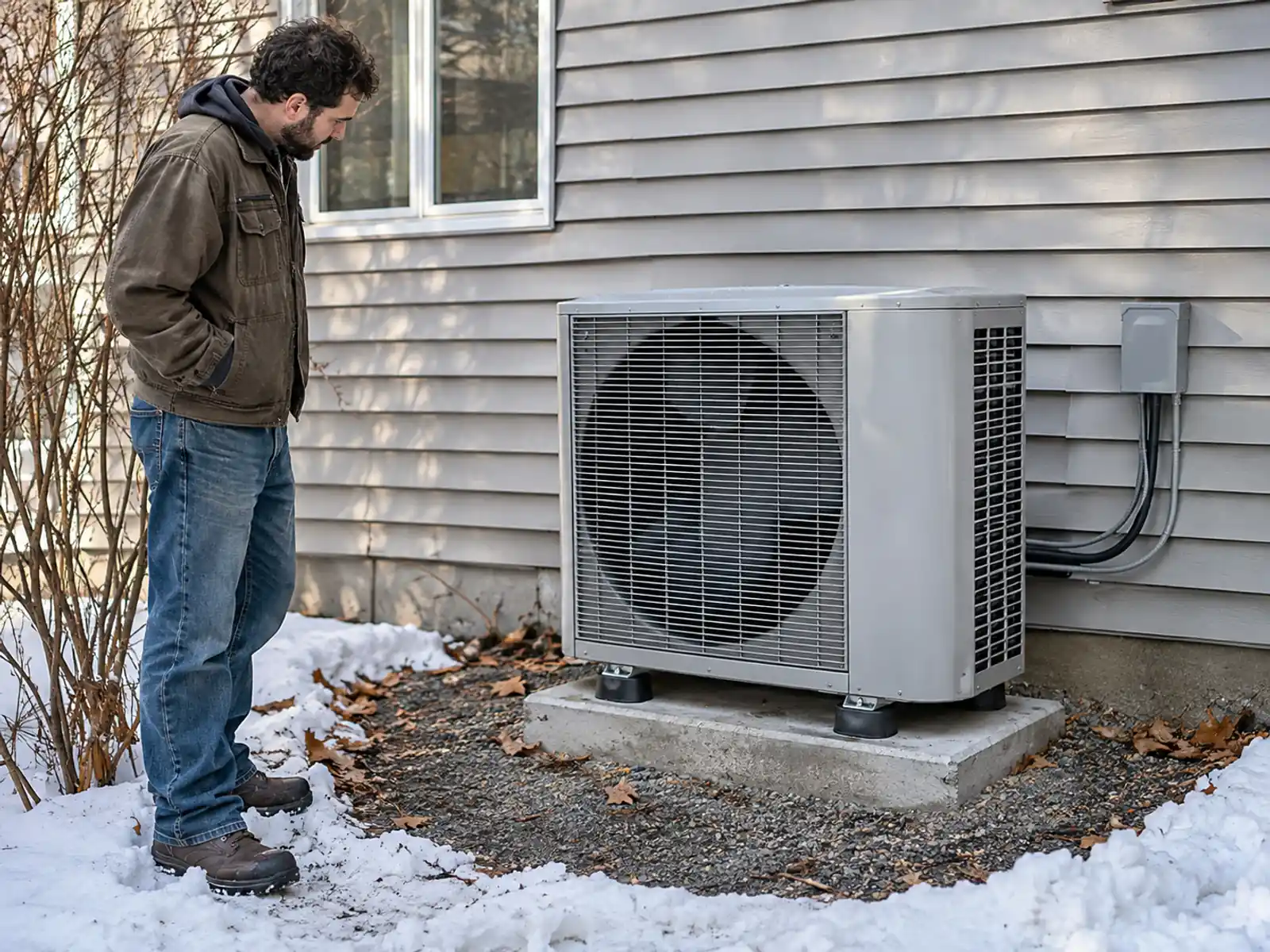
- Clear indoor vents and remove leaves, grass, or loose snow from around the outdoor unit without opening its cabinet.
- Confirm that thermostat, remote, and schedule show the intended mode and setpoint.
- Schedule professional service as directed by the manual and local rules, especially if the unit has not been checked recently.
Owner-accessible maintenance
Indoor unit filter
A dust-loaded filter can restrict airflow. Record the model and check whether the filter is washable or disposable, where it releases, and how often the manufacturer says to inspect it. Some units show a maintenance reminder; that light does not replace a visual check. Turn the unit off as the manual directs, remove only the part intended for user access, and do not force a panel.
Rinse a reusable filter only when the manufacturer permits it, then let it dry fully before reinstalling. Replace disposable media with the specified size and part. Our guide explains how to clean an air conditioner filter without damage; your heat pump may use different instructions. Check: the filter is intact, dry, and seated correctly.
Vents and airflow
Move curtains, furniture, and objects away from accessible supply and return openings. In a ducted system, do not remove fixed grilles or clean ducts blindly. If airflow remains low after filter service, another issue may involve a fan, duct, coil, or system sizing; arrange a diagnosis.
Outdoor unit and drainage
Remove leaves and loose debris at ground level without removing panels or touching fins. Follow the clearance specified for the exact model because it varies. In winter, check that snow or ice does not block the air inlet or outlet; do not break ice or pour hot water. An outdoor unit can release water during defrost, which may make a nearby path slippery. Keep walkways clear.
Thermostat, remote, and service notes
Check batteries if the manual recommends it, and verify the clock and schedule after a power interruption. Record codes, lights, noises, or changes in operation before resetting anything. Keeping dates for service visits and filter changes makes it easier to explain a recurring issue to a technician.
What a professional service visit may cover
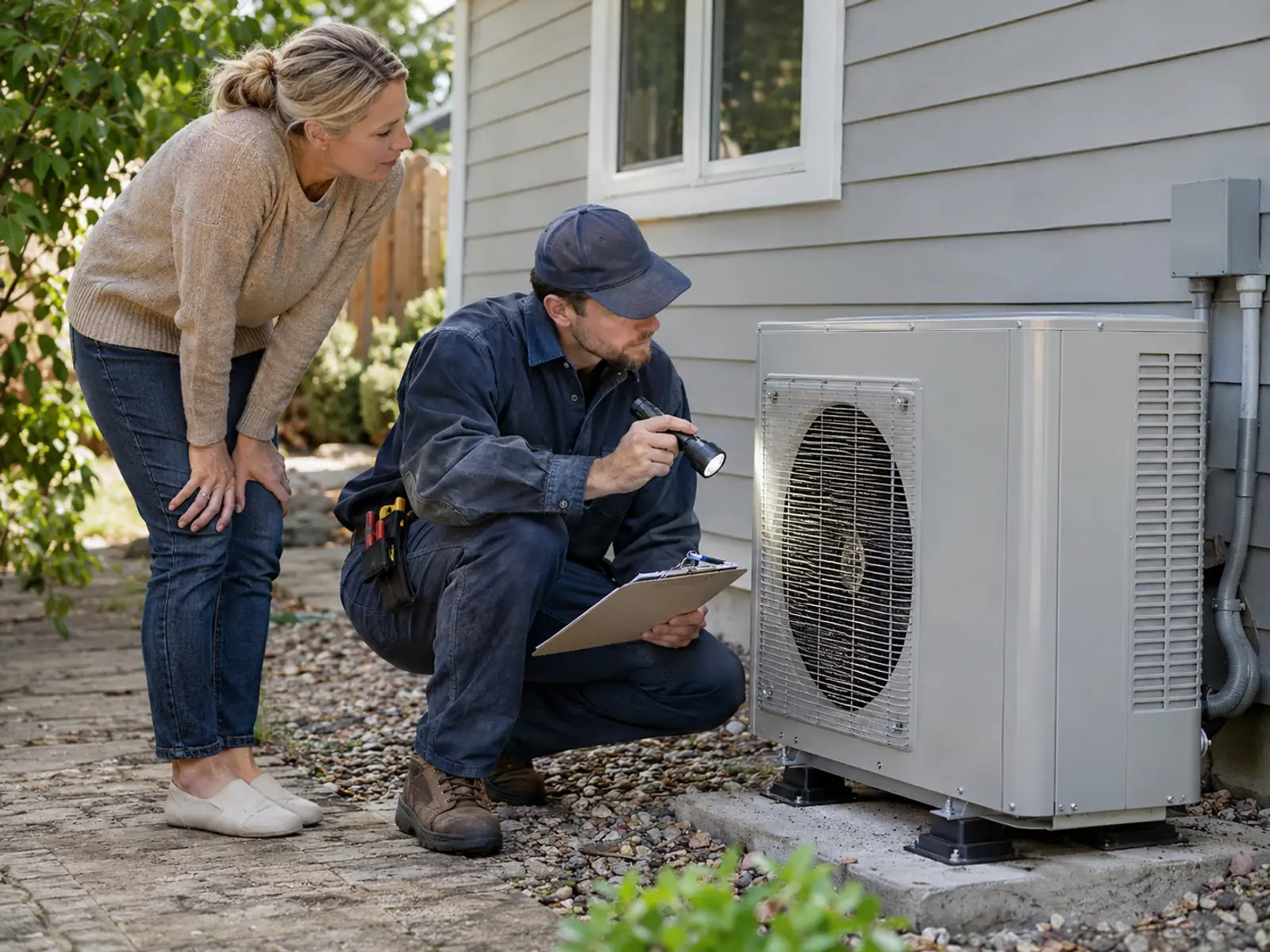
Ask the contractor what the visit includes for your type of heat pump. ENERGY STAR lists checks such as the system, thermostat, and filters; the detailed work depends on the installation. A technician may inspect internal components, coils, condensate drainage, electrical connections, controls, and manufacturer-specified settings. Some tasks require tools, access, or certification a homeowner does not have.
Maintenance does not mean adding refrigerant “just in case.” If a refrigerant charge needs adjustment, ask the professional to identify the cause and check the system under applicable rules. Procedures vary by refrigerant and equipment.
Issues to address before winter
| Observation | Action |
|---|---|
| Very dusty filter or repeated reminder | Clean or replace it as directed; ask why the reminder returns quickly. |
| Weak airflow with a clean filter | Clear accessible openings and request service if airflow remains low. |
| Outdoor unit often covered in thick ice | Stop manual troubleshooting and have defrost and drainage checked. |
| Tripped breaker, burning smell, or damaged cable | Leave the system off and call a qualified professional. |
| New code or indicator | Photograph the display, record the model, and check the manufacturer’s description. |
Maintenance mistakes to avoid
- Washing a non-washable filter or reinstalling a filter while it is wet.
- Spraying chemicals or directing a high-pressure hose at the coil.
- Levering fins, opening the electrical cabinet, or moving the equipment.
- Applying another model’s schedule or a heat-pump clothes dryer’s instructions.
Frequently asked questions
How often should a heat pump be serviced?
Use the schedule for the exact model. Check filters more often during operating seasons and arrange professional service based on the equipment’s needs and local recommendations.
What heat pump maintenance can I do myself?
A homeowner can maintain a filter expressly designed for user access and remove loose debris from the ground around the outdoor unit. Do not open electrical or refrigerant compartments.
Is ice around an outdoor heat pump normal?
Water can drain during defrost and freeze near the unit. Thick, persistent ice on the coil or heating that does not resume needs diagnosis; do not break it off.
Does refrigerant need an annual top-up?
Refrigerant is not a routine fluid to top up on a schedule. A qualified professional checks it when symptoms, manufacturer specifications, and applicable rules call for diagnosis.
Next step
If the unit has stopped heating, follow our guide to safe checks for a heat pump that will not heat. To distinguish a home heating system from a heat-pump clothes dryer, see our heat-pump dryer condenser guide. Confirm the schedule with the maker of your exact model.
Sources
- ENERGY STAR, heating and cooling maintenance checklist, accessed November 16, 2026.
- ENERGY STAR, clean heating system filters and maintenance, accessed November 16, 2026.
- U.S. Department of Energy Building Science Education, air-source heat pump homeowner guide, accessed November 16, 2026.
Last updated: November 16, 2026.
Be the first to leave a comment.